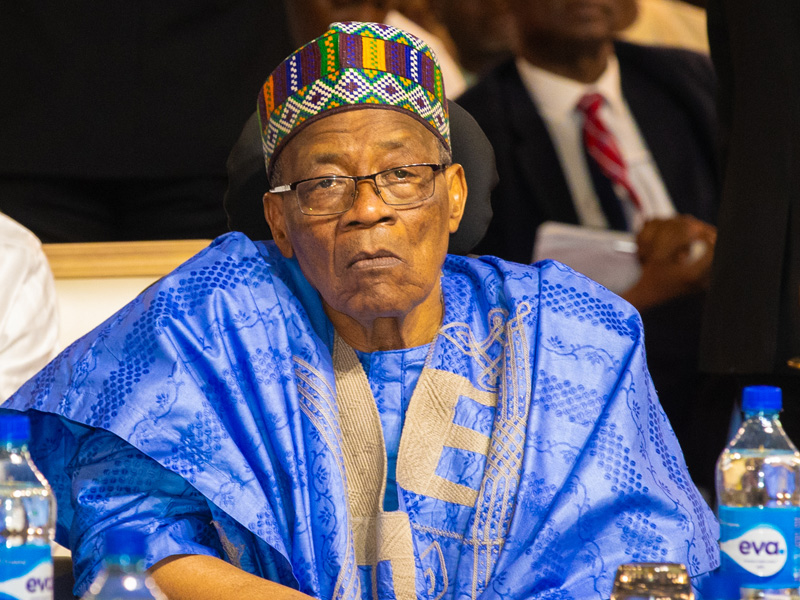
Former Military President, Ibrahim Badamasi Babangida, has stirred widespread reactions following comments about his health and mortality while addressing the nation’s security challenges.
In a statement shared through his social media platforms in Minna, the former leader called for a decisive military response against banditry and terrorism, urging the government not to accept surrender offers from armed criminal groups.
During the message, Babangida remarked:
“I feel weak myself. I am not sure whether I will survive beyond this year. Our prayer is to end our lives in faith.”
The comment quickly attracted public attention, with many Nigerians interpreting it as a moment of personal reflection from the 84-year-old former leader, who has largely stayed away from public life since leaving office in August 1993.
Babangida, who governed Nigeria from 1985 to 1993, remains one of the country’s most discussed political figures. His years in power continue to generate debate among Nigerians, particularly regarding economic reforms and the annulment of the June 12, 1993 presidential election, widely regarded as one of the most credible elections in the nation’s history.
Political observers and citizens have continued to express differing opinions about his legacy. While some acknowledge his influence on national politics and governance, others believe decisions made during his administration contributed to challenges Nigeria later faced.
The annulment of the June 12 election remains a defining issue in discussions about Babangida’s time in office. Several historical accounts have referenced the roles played by politicians and legal actors during that period, including the late Arthur Nzeribe and Justice Bassey Ikpeme.
Despite years away from active politics, Babangida is still regarded as an influential statesman whose views attract national attention. Political leaders and associates are known to consult him on national matters from time to time.
His recent remarks about his health have also prompted reflections on the transient nature of power and public life. Many Nigerians have responded with prayers and goodwill, while others see the moment as an opportunity to reflect on the country’s political journey and leadership history.
As conversations continue, Babangida’s comments have once again highlighted the enduring public interest in the legacy of one of Nigeria’s most prominent former leaders.