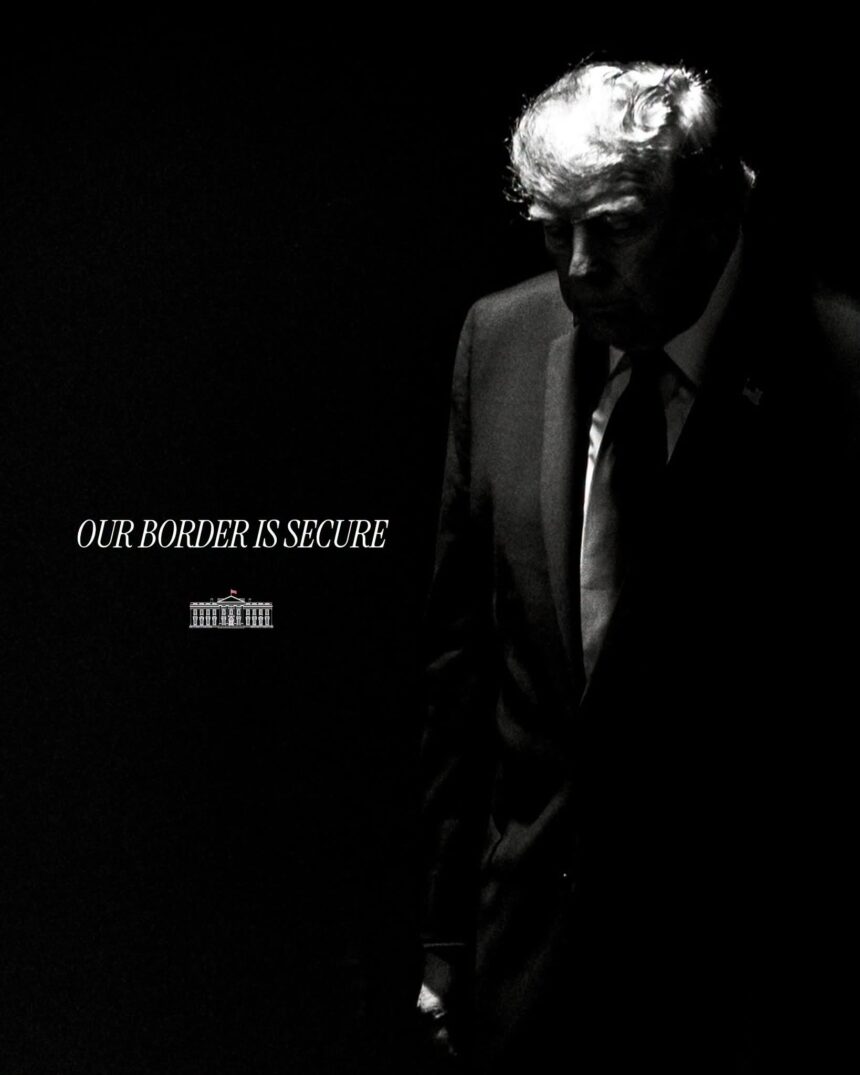
NEW YORK — As world leaders gather for the 81st United Nations General Assembly amid continuing debates over international security, migration, sovereignty and transnational crime, U.S. President Donald Trump has placed border security at the centre of his administration’s national-security message.
“Our border is secure,” Trump has declared, presenting border control as a fundamental responsibility of government and a key component of national security.
The administration argues that stronger enforcement at the U.S. border has contributed to a significant reduction in irregular crossings and has strengthened efforts to combat human trafficking, drug smuggling and criminal networks. The White House has described the border as the most secure in American history, while calling for continued funding and enforcement measures.
The issue has particular resonance during the UN General Assembly, where governments are addressing a broad range of security challenges, including armed conflicts, irregular migration, human trafficking, transnational crime and the need for greater international cooperation.
The United Nations has also highlighted the complex relationship between migration and security. UN Secretary-General António Guterres has called for stronger international cooperation against migrant-smuggling and trafficking networks while emphasizing safe and regular migration pathways and the protection of migrants’ rights.
Against this backdrop, the Trump administration’s position emphasizes the sovereign right of the United States to determine who enters its territory and under what conditions. The U.S. government has also argued at the United Nations that national governments should retain primary authority over their immigration and border policies.
The broader security debate therefore extends beyond physical borders. It encompasses cooperation among states, the disruption of criminal networks, the management of migration flows, protection against trafficking and the balance between national sovereignty and international cooperation.
As world leaders deliberate on these issues at the United Nations, Trump’s message is clear: border security is being presented by his administration not simply as an immigration issue, but as a central element of national security and state sovereignty.
The continuing international debate will centre on how governments can secure their borders, address irregular migration and transnational crime, and at the same time uphold their international obligations and cooperate on shared security challenges.