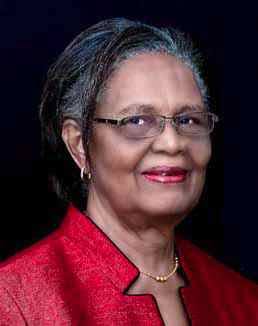
Prof. Grace Alele-Williams, Nigeria’s first female Vice-Chancellor and the first Nigerian woman to earn a doctorate in Mathematics, was popularly nicknamed “Mamangida” during her tenure at the University of Benin (UNIBEN), a name reportedly linked to her firm and sometimes controversial leadership style.
Alele-Williams, who lived from December 16, 1932, to March 25, 2022, made history in 1985 when she was appointed Vice-Chancellor of the University of Benin by the then military Head of State, General Ibrahim Babangida.
Her appointment attracted criticism in some sections of the media, with detractors reportedly using the nickname “Mamangida” to associate her leadership with the military administration that appointed her.
However, accounts from former students and members of the university community suggest that the nickname was not solely a reaction to her appointment but was also influenced by her firm approach to administration, particularly during student protests.
One former student, reflecting on her leadership during the university’s turbulent years, said the nickname was frequently used during student demonstrations and other disagreements with the university management.
According to the former student, Alele-Williams was perceived by some students as a disciplinarian whose leadership style sometimes resembled the authoritarian approach associated with the military government of the period.
“She was more known as the Iron Lady, and when she used real hard force against the students, which we saw as being dictatorial and likened to the military-styled regime of that era, Mamangida was used for her,” the former student recalled.
The individual, however, acknowledged that the professor meant different things to different people, describing her as the “Iron Lady of Greatest UNIBEN.”
Another former student who witnessed her administration during the 1988 student protests described her as fearless, poised and firm in her convictions.
The former student also recalled that Alele-Williams defended students following the anti-Structural Adjustment Programme (SAP) riots, reportedly insisting that the destruction recorded during the unrest was carried out by hoodlums.
Other commentators have argued that the nickname was largely a reflection of her uncompromising personality and determination to maintain discipline and pursue excellence in the university.
Despite the controversies surrounding her leadership style, Alele-Williams earned widespread recognition for her contributions to the development of the University of Benin, where she served as Vice-Chancellor from 1985 to 1992.
Several former students and admirers have continued to celebrate her legacy, describing her as a trailblazer, an accomplished scholar and one of the most influential administrators in the institution’s history.
One admirer praised her infrastructural contributions, saying she made remarkable strides in expanding facilities and strengthening the university’s position as a leading centre of learning.
Others recalled her contributions to academic development, including her involvement in programmes that benefited students and teachers.
A former beneficiary of her holiday sandwich course also expressed appreciation for the opportunity, while describing her as a great mathematician.
Although the nickname “Mamangida” remains part of the stories surrounding her tenure, many who encountered her remember her more fondly as the “Iron Lady of Benin” — a woman whose firmness, courage and determination helped shape the history of the University of Benin.
Her legacy continues to inspire conversations about women’s leadership, academic excellence and the contributions of Nigerian women to national development.
Credit: African Stories, Historical Africa