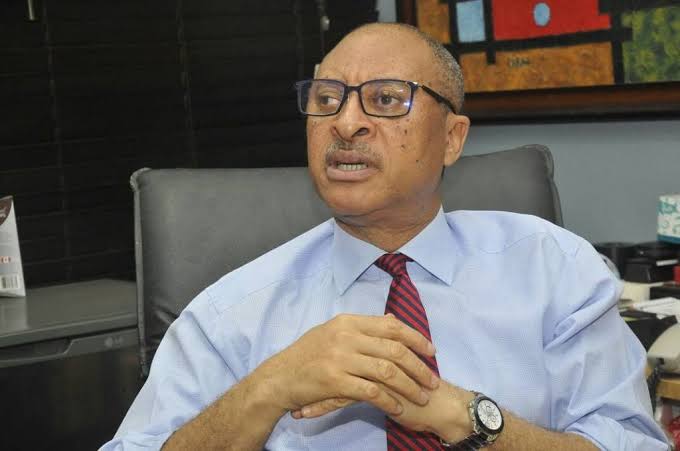
Political economist and prominent political commentator, Professor Pat Utomi, has criticised the state of governance in Nigeria, accusing the current administration of relying on propaganda, shifting blame and offering manufactured hope instead of addressing the country’s worsening challenges.
Utomi, in a strongly worded statement, expressed concern over the deteriorating condition of major roads, rising transportation costs and the hardship faced by Nigerians, using the journey from Abakaliki to Lagos as an example of what he described as the country’s declining infrastructure.
Taking a swipe at the Minister of Works, Senator David Umahi, Utomi questioned government narratives about infrastructure development, arguing that the realities experienced by road users tell a different story.
He claimed that a journey from Abakaliki to Lagos, which reportedly took about eight hours during the administration of former President Muhammadu Buhari, now sometimes takes as long as three days because of poor road conditions.
Utomi also alleged that the cost of transporting containers along the route had tripled, while trailers continued to overturn on pothole-ridden and muddy roads, worsening the difficulties confronting businesses and commuters.
The former presidential candidate argued that successive governments should be judged by their performance rather than political narratives, lamenting what he described as a growing tendency among incumbent administrations to blame their predecessors instead of taking responsibility for current challenges.
“It used to be that incumbents ran on their records. In Nigeria today, they run from their records, shifting the blame for the misery in the land to those who came before them and postponing solutions to some distant future,” Utomi stated.
He further drew parallels with the Structural Adjustment Programme (SAP), warning that promises of a better future could become deceptive if government policies failed to translate into tangible improvements in the lives of ordinary Nigerians.
According to him, the belief that manufactured hope could indefinitely sustain public confidence was a dangerous political miscalculation, particularly at a time when Nigerians were grappling with economic hardship and declining living standards.
Utomi also warned that the apparent silence of many Nigerians should not be mistaken for satisfaction with the state of affairs, suggesting that fear and intimidation could be preventing citizens from openly expressing their frustrations.
He expressed the belief that voters could use the ballot box to communicate their dissatisfaction when the opportunity arises.
“The people know that speaking candidly in an atmosphere of intimidation could come at a heavy price. So, they wait, biding their time for the moment when the people will have their say,” he added.
Utomi’s comments come against the backdrop of growing political conversations ahead of the 2027 general elections, with the performance of the Federal Government, infrastructure development, economic hardship and accountability expected to feature prominently in political debates.
His remarks add to mounting criticism from opposition voices and government critics who have called for greater transparency, improved public infrastructure and policies that deliver measurable relief to Nigerians.