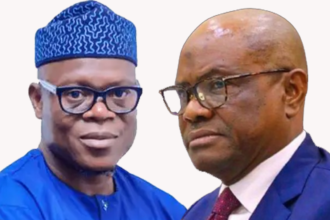
The Minister of the Federal Capital Territory (FCT), Nyesom Wike, has cautioned the National Secretary of the All Progressives Congress (APC), Senator Ajibola Basiru, against making statements or engaging in actions he considers interference in the political affairs of Rivers State.
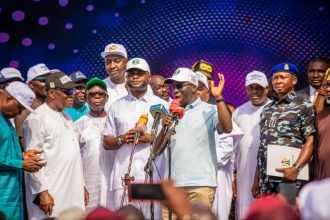
Wike issued the caution on Monday during a thank-you visit to Oyigbo Local Government Area of Rivers State, where he addressed supporters and political stakeholders.
According to the FCT Minister, some political actors were, in his view, making what he described as careless and provocative comments about Rivers State, allegedly motivated by reports of substantial funds in the state’s treasury.
The remarks followed comments earlier credited to the APC Vice Chairman (South-South), Victor Giadom, who, during a recent political engagement, reportedly referred to Governor Siminalayi Fubara as “the so-called governor” and suggested that the governor’s future political prospects were linked to Wike’s influence.
Reacting to those remarks, Senator Ajibola Basiru, in a Facebook post on Sunday, described such comments as inappropriate and emphasised the need to respect the office of a sitting governor, regardless of political disagreements.
“I find it unfortunate that a member of the NWC was referring to a governor in our party as a ‘so-called governor of Rivers State,’” Basiru wrote.
“The office of the governor is an exalted position, and whoever occupies it must be respected, irrespective of political differences.”
Responding to Basiru’s intervention, Wike warned against what he described as external involvement in Rivers State political matters, stating that political issues within the state should be handled by its stakeholders.
He advised those engaging in Rivers politics to exercise caution, urging them to learn from past political experiences in the state.
“Let me warn those who come to Rivers State; because you hear that there is money here, you come, collect, and then begin to talk recklessly,” Wike said during the visit.
Wike’s comments reflect ongoing tensions within the state’s political landscape, as party leaders and stakeholders continue to express differing views on governance and political conduct in Rivers State.