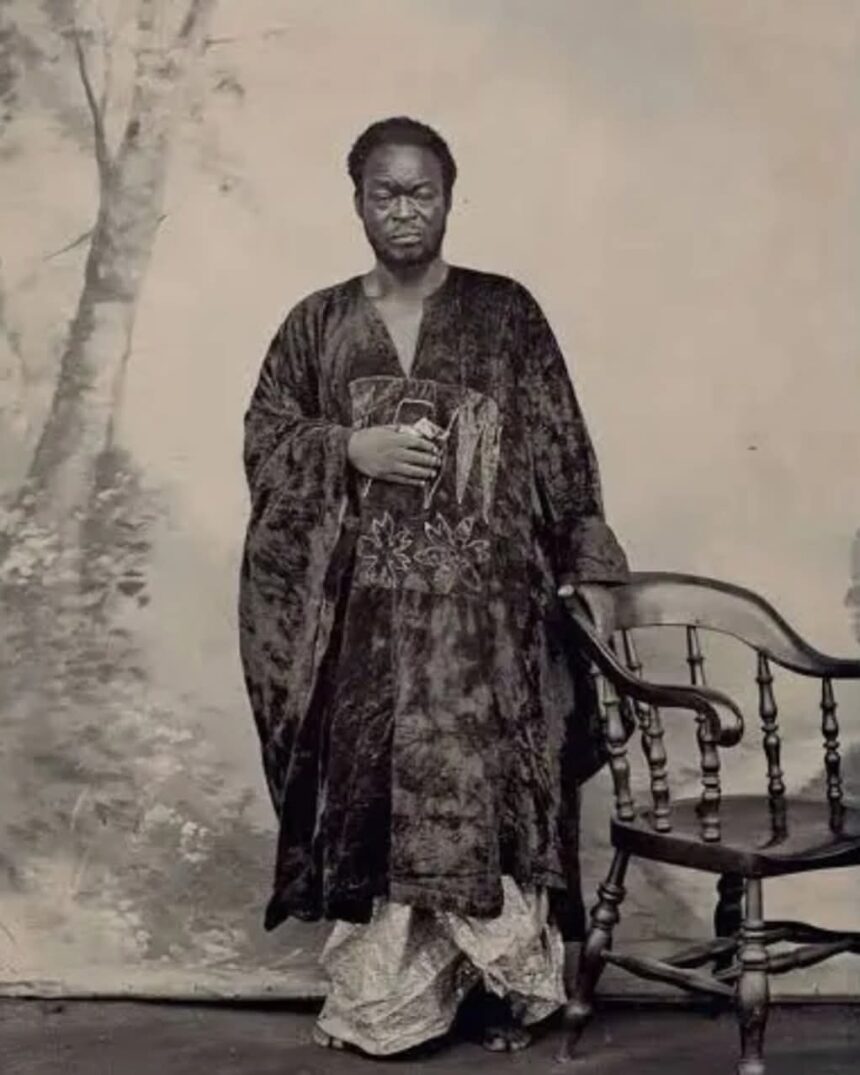
In the first week of January 1914, news reached Benin City that Oba Ovonramwen Nogbaisi, the last independent ruler of the Benin Kingdom, had passed away in exile in Calabar, where he had been held since the British invasion of 1897. His death had occurred in the last week of December 1913, but, with the situation of things at the time, the announcement to the kingdom came weeks later.
On learning of his father’s illness, Prince Aiguobasimwin, later crowned Oba Eweka II, had travelled to Calabar in November 1913., although it was never established if the Crown Prince was present in his father’s final days to bear witness to the quiet end of a king whose reign had been violently interrupted, but never morally defeated.
Oba Ovonramwen’s story is one of resistance and dignity under impossible circumstances. After refusing to submit to British demands that threatened Benin’s sovereignty, his kingdom was invaded, his city burned, his sacred bronzes looted, and he was forcibly exiled. Yet even in defeat, he remained a symbol of legitimacy.
His death marked the end of an era, but not the end of the Benin monarchy. In 1914, the same year Nigeria was amalgamated by the British, Benin prepared for restoration. His son would ascend the throne as Oba Eweka II, beginning the long process of rebuilding a shattered kingdom.
It’s been 129 years since the events of 1897. Oba Ovonramwen’s legacy endures as a reminder that conquest may seize territory, but it cannot erase cultural sovereignty, memory, or history.
Credit:Benin History