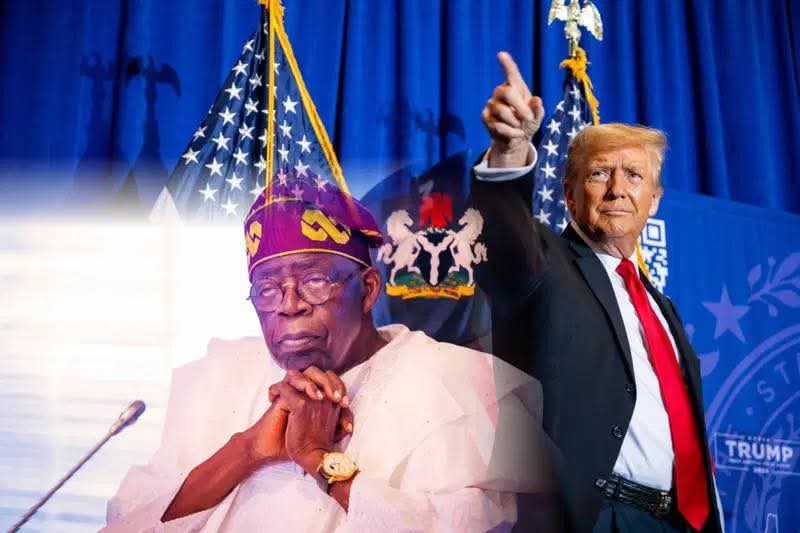
The U.S. President Donald Trump has warned that the United States could consider additional military strikes in Nigeria if attacks on Christians continue, according to comments he made during an interview with The New York Times (NYT).
Trump made the remarks while responding to questions about U.S. missile strikes carried out on Christmas Day against targets linked to the Islamic State group. The operation had raised speculation about whether Washington was embarking on a broader military campaign in West Africa.
“I’d love to make it a one-time strike,” Trump told the NYT. “But if they continue to kill Christians, it will be a many-time strike.”
The Christmas Day strikes followed earlier statements by Trump in which he threatened to deploy U.S. troops to Nigeria, claiming they would move in “guns-a-blazing” to confront terrorist groups accused of attacking Christian communities. Some U.S. politicians and advocacy groups have repeatedly alleged that Christians are being subjected to systematic violence in the country.
Nigerian authorities, however, have pushed back against those claims. According to Ademola Oshodi, Senior Special Assistant to President Bola Tinubu on Foreign Affairs and Protocol, Nigeria retained control over the decision-making process surrounding the single U.S. military operation.
The Nigerian government has consistently denied allegations of a targeted campaign against Christians, maintaining that the country’s security challenges affect citizens across religious lines.
In October, Trump’s senior adviser on Arab and African affairs, Massad Boulos, stated that extremist groups such as Boko Haram and Islamic State affiliates were killing more Muslims than Christians in Nigeria. When asked about those comments during the NYT interview, Trump acknowledged the broader impact of the violence but maintained his position.
“I think that Muslims are being killed also in Nigeria,” Trump said. “But it’s mostly Christians.”
The issue remains a subject of debate among international observers, Nigerian officials, and U.S. policymakers, as discussions continue over the nature of the violence and the appropriate international response.
Credit: Vanguard