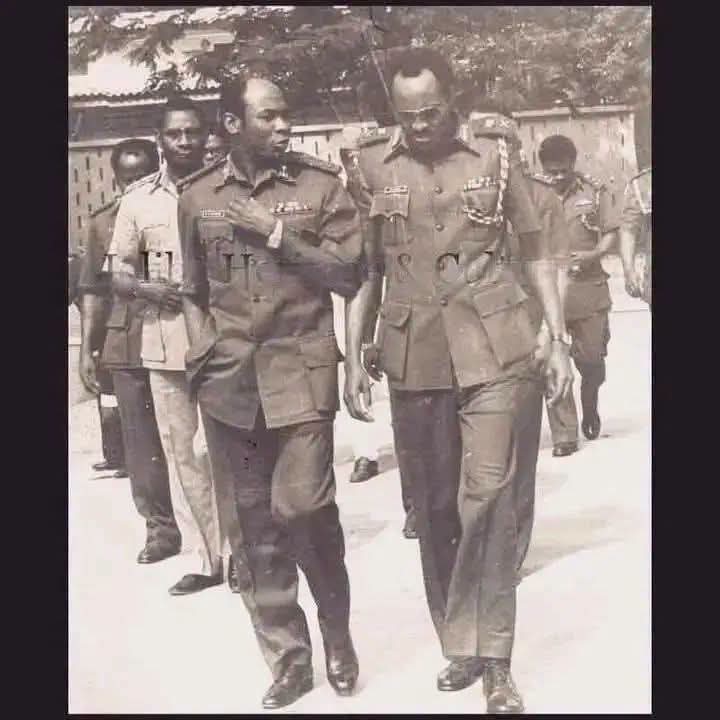
A historical reflection circulating online has renewed discussion about the legacy of Major-General Tunde Idiagbon, the former Chief of Staff, Supreme Headquarters, and deputy to then Head of State Major-General Muhammadu Buhari during Nigeria’s military administration between December 31, 1983, and August 27, 1985.
In the retrospective, credited to Clara Dike Wall, Idiagbon is portrayed as the driving force behind the Buhari administration’s strict enforcement of discipline and public order during its 20-month rule. Often described as “The Disciplinarian,” he is remembered for spearheading the War Against Indiscipline (WAI), a nationwide campaign introduced in 1984 to promote orderliness, punctuality, environmental sanitation, and accountability.
According to the account, the WAI programme unfolded in phases, beginning with the enforcement of orderly queues at public places such as bus stops, banks, and government offices. Soldiers were reportedly deployed to ensure compliance. Subsequent phases emphasized punctuality and productivity among civil servants, anti-corruption measures, and monthly environmental sanitation exercises observed on the last Saturday of each month.
The historical reflection also highlights several economic policies introduced during the period. These included the redesign of Nigeria’s currency in April 1984, border closures aimed at curbing smuggling, reductions in government spending, encouragement of agricultural production through the “Go Back to Land” initiative, and restrictions on imports to support local industries.
On security and justice, the report recalls the enactment of tough decrees under the military government, including capital punishment for certain offences such as drug trafficking and oil-related crimes. It also references the establishment of special tribunals that prosecuted several politicians from the Second Republic on corruption-related charges.
The Buhari-Idiagbon administration came to an abrupt end on August 27, 1985, when General Ibrahim Babangida overthrew the government in a military coup while Idiagbon was in Saudi Arabia for the Hajj pilgrimage. Idiagbon did not return to political office and died in 1999.
The reflection concludes that although many Nigerians viewed the administration’s methods as harsh, others remember the period for its emphasis on discipline, order, and public accountability. It also notes that the Economic and Financial Crimes Commission (EFCC) headquarters in Abuja bears the name “Idiagbon House” in recognition of his legacy.
The renewed discussion has once again highlighted the enduring debate over Major-General Idiagbon’s place in Nigeria’s history, with supporters praising his commitment to discipline and critics pointing to the authoritarian nature of the military regime.
Source: Historical reflection by Clara Dike Wall.