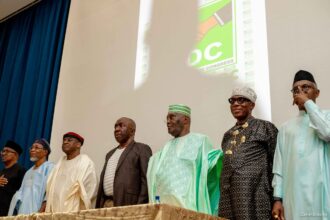
Federal lawmakers from Edo State have unanimously opposed any proposal to excise parts of the state for the creation of the proposed Toru-Ebe State, declaring that no portion of Edo land should be ceded without the consent of the affected communities and due constitutional process.
The position was formally presented on the floor of the House of Representatives through a motion sponsored by Hon. Omosede Gabriella Igbinedion, representing Ovia North-East/Ovia South-West Federal Constituency, alongside other Edo lawmakers.
The motion specifically raised concerns over reported plans to include communities within Ovia and Ikpoba-Okha Local Government Areas—including Ughoton, Siluko, Ologbo, Ikoro, Kolobo, and surrounding settlements—in the proposed new state.
Concerns Over History, Culture, and Due Process
In her presentation, Hon. Igbinedion emphasized that the affected communities are historically and culturally linked to the Benin Kingdom and have long been part of Edo State.
She cautioned that any attempt to alter existing boundaries without broad consultation and constitutional compliance could undermine social harmony and disregard the wishes of indigenous populations.
According to her, state creation efforts must adhere strictly to the provisions of the Nigerian Constitution, including community consent, legislative approvals, and referenda where applicable.
Unified Position Across Edo State
Lawmakers from Edo North, Central, and South senatorial districts reportedly spoke in support of the motion, reflecting a unified stance across the state against the proposed excision of any Edo territory.
Supporters of the motion stressed that their position was not an opposition to state creation in principle, but rather a call for respect for established boundaries, historical identity, and the rights of affected communities.
Context: Ongoing Constitutional Review
The proposed Toru-Ebe State is among several state creation requests currently before the National Assembly as part of Nigeria’s ongoing constitutional review process.
Proponents of the proposal argue that it would promote administrative efficiency and address perceived marginalization. However, lawmakers and community representatives from Edo State—as well as neighboring Delta and Ondo States—have raised concerns about overlapping claims on ancestral lands and insufficient consultation.
House Notes Edo’s Objection
Following deliberations, the House of Representatives formally noted Edo State’s objection to the inclusion of its communities in the proposed Toru-Ebe State, ensuring that the concerns are part of the legislative record as discussions continue.
Public Reaction
Across Edo State, reactions from residents and community stakeholders have underscored strong attachment to land, history, and cultural identity, with many calling on lawmakers to safeguard the state’s territorial integrity.
As the constitutional review process continues, Edo lawmakers maintain that any restructuring must be inclusive, lawful, and respectful of the people whose lives and heritage are directly affected.
Credit: Benin Blogger