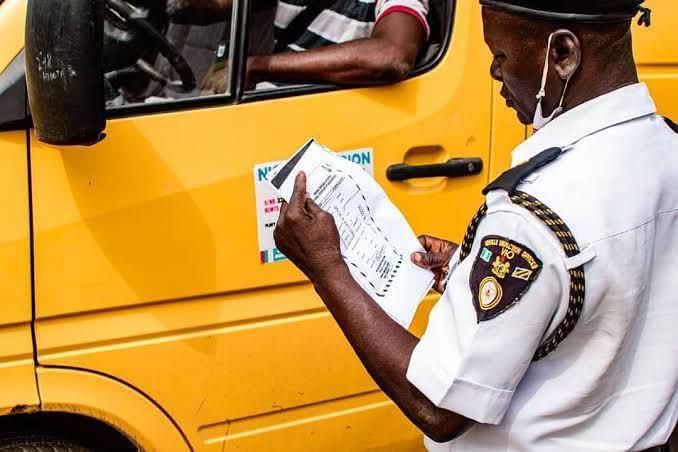
The Lagos State Government has clarified that the recent judgment of the Court of Appeal, Abuja Division on Vehicle Inspection Service (VIS) operations does not invalidate enforcement activities in Lagos.
The state’s Commissioner for Justice and Attorney-General, Lawal Pedro, said interpretations circulating online suggesting that the appellate court’s ruling applies nationwide are misleading.
Pedro’s clarification follows a judgment by the Court of Appeal, Abuja Division, which upheld an earlier decision of the Federal High Court restraining Vehicle Inspection Officers (VIO) and the Directorate of Road Traffic Services in the Federal Capital Territory (FCT) from stopping motorists, impounding vehicles, or imposing fines.
In a statement, the attorney-general explained that both the Federal High Court and the Court of Appeal based their decisions on the absence of statutory powers authorising VIO officials in the FCT to stop, impound, confiscate vehicles, or impose fines on motorists.
“It is important to understand that the Honourable Judge of the Federal High Court and Justices of the Court of Appeal premised their decision on absence of statutory power conferred on the Respondents to stop, impound or confiscate vehicles and/or impose fines on motorists on roads in FCT Abuja,” the statement read.
While acknowledging that the ruling is valid within the FCT, the Lagos State Government stressed that the judgment is not of general or nationwide application.
“The judgment, though binding, is not of general application or of nationwide effect in Nigeria,” the ministry stated, noting that Nigeria’s federal structure allows states to legislate on residual matters such as vehicle inspection and traffic management.
The government further emphasised that Lagos operates under the Lagos State Transport Sector Reform Law, which expressly establishes and empowers the Vehicle Inspection Service (VIS).
Citing Section 12(1) of the law, the government said the VIS is vested with authority to inspect and regulate the roadworthiness of vehicles, conduct pre-registration inspections, issue Road Worthiness Certificates, and collaborate with other relevant agencies to enforce traffic regulations within the state.