BENIN CITY, Edo State — The Edo State Flood, Erosion and Watershed Management Agency (EDOFEWMA) has called for early intervention in erosion-prone communities to prevent emerging gullies from developing into major environmental disasters.
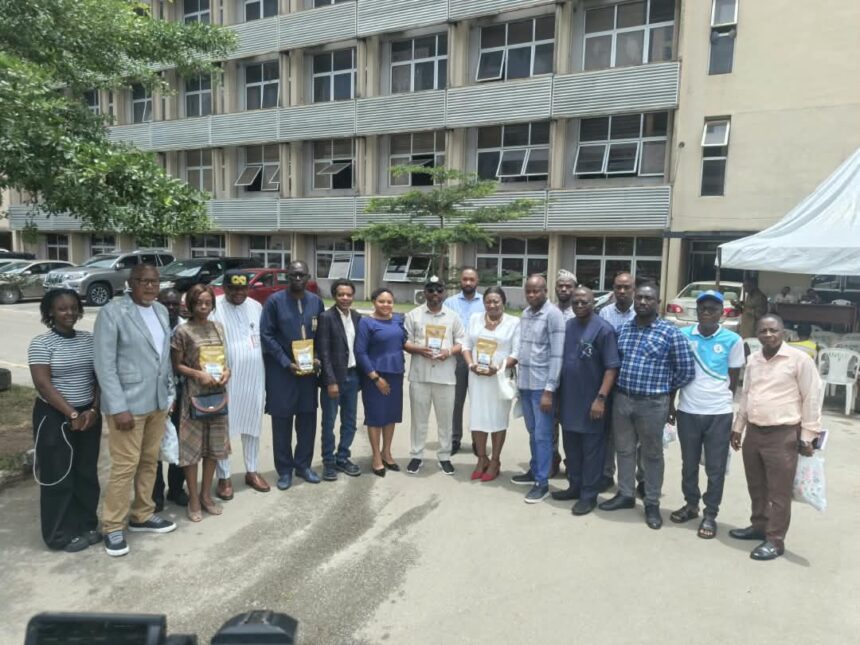
The agency’s Chief Executive Officer, Mr Mohammed Okoyomoh, made the call on Wednesday at a stakeholders’ engagement on soil erosion control and stabilisation organised by a team from the University of Lagos in Benin City.
Okoyomoh said the engagement brought together experts and relevant stakeholders to explore practical and sustainable approaches to addressing the state’s persistent erosion and flooding challenges.
He disclosed that EDOFEWMA had identified several major gully erosion sites across Edo’s three senatorial districts, stressing that tackling erosion at its early stages would help prevent smaller sites from escalating into catastrophic problems.
According to him, the agency has completed more than 35 designs for erosion-control projects across the state, following the mandate and support of the administration of Governor Monday Okpebholo.
“Erosion control is not something you just jump into. You need a comprehensive design before you can solve the problem,” Okoyomoh said.
He explained that designs had been completed for erosion sites in Edo South, Edo Central and Edo North, while civil works on some projects would commence after the rainy season.
On flooding, the EDOFEWMA chief said the agency had recorded progress in areas such as Ikpoba, where improvements to drainage and underground infrastructure had enhanced the movement of storm water.
He added that the state government had also channelled water from the Tempoga area into the river, a measure he said had helped reduce the risk of flooding within the affected catchment.
Speaking on the university’s intervention, Prof. Lukeman Adams, Director of the Central Research and Reference Laboratory, University of Lagos, said the institution’s research team had visited Edo about a year ago and collected soil samples from the three senatorial districts.
Adams said the research was aimed at developing a locally applicable solution for tackling incipient and gully erosion before they became extensive and destructive.
He said the team returned to Edo to demonstrate an integrated soil-stabilisation approach involving nano-silica, nanotechnology and organic soil vegetation.
According to him, the approach is designed to bind loose soil particles, increase soil density and compactness, and reduce the tendency of soil to be washed away by water.
Adams said the proposed solution was safe, explaining that its components occur naturally in soil. He noted that nano-silica is derived from silica, a substance found in sand.
He said the technology could complement the agency’s existing erosion-control measures by providing an additional option for dealing with erosion at its early stages.
“What we are advocating is that before it gets to those big, massive problems, let us arrest the problem,” Adams said.
Also speaking, Mr Johnson Adamu, Special Adviser to Governor Monday Okpebholo on Environment and Sustainability, described environmental protection as a key responsibility of government that requires collective action.
Adamu said the expertise and recommendations presented by the University of Lagos team could strengthen the state’s existing roadmap for erosion management.
He added that the state government would study the recommendations and consider how applicable solutions could be integrated into its ongoing efforts to tackle flooding and erosion across Edo.