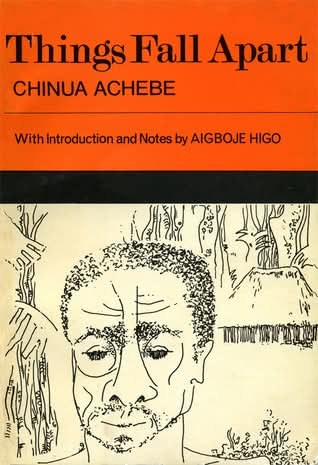
Chinua Achebe’s celebrated novel, Things Fall Apart, published in 1958, remains one of Africa’s most influential literary works, offering a powerful account of traditional Igbo society and its tragic encounter with British colonialism.
Set in the fictional Igbo community of Umuofia in pre-colonial Nigeria, the novel explores the cultural values, traditions, social structures and religious beliefs of the people before the arrival of European missionaries and colonial authorities.
The story revolves around Okonkwo, a respected warrior and influential member of his community, whose life is shaped by an overwhelming fear of resembling his father, Unoka, whom he considers weak and unsuccessful.
Determined to achieve greatness, Okonkwo builds his reputation through hard work, strength and strict adherence to traditional expectations. However, his aggressive nature, pride and inability to control his emotions gradually create tensions within his family and the wider community.
One of the novel’s most tragic moments occurs when Okonkwo participates in the killing of Ikemefuna, a young boy who has become deeply attached to his family. Despite warnings against taking part in the killing, Okonkwo acts out of fear of appearing weak.
His fortunes take another turn when he accidentally kills a clansman during a funeral ceremony. Under Igbo customary law, the incident is considered a serious offence, forcing him into a seven-year exile in his maternal homeland.
When Okonkwo eventually returns to Umuofia, he discovers that his community has undergone significant changes following the arrival of Christian missionaries and British colonial administrators.
The new religious and political systems gradually undermine traditional authority, cultural practices and the established social order. As divisions deepen within the community, Okonkwo becomes increasingly frustrated by what he sees as his people’s unwillingness to defend their traditions.
In a desperate attempt to provoke resistance, he kills a colonial messenger who arrives to stop a community gathering. However, when he realises that the people are unwilling to engage in an uprising against the colonial authorities, Okonkwo takes his own life.
His suicide, regarded as an abomination under Igbo customs, marks the tragic end of a man whose personal struggle for honour and strength becomes intertwined with the collapse of the society he seeks to defend.
Through Things Fall Apart, Achebe challenged the negative and often racist representations of Africa in colonial literature. Rather than portraying Africans as people without history or civilisation, he presented Igbo society as a sophisticated community with established laws, institutions, traditions and moral values.
The novel has since achieved international recognition, been translated into more than 60 languages and sold millions of copies worldwide. It is widely regarded as a landmark in African literature and remains an important text in schools and universities across the world.
More than six decades after its publication, Things Fall Apart continues to stimulate conversations about identity, cultural preservation, colonialism, tradition and the consequences of social change.
Credit: African Literature