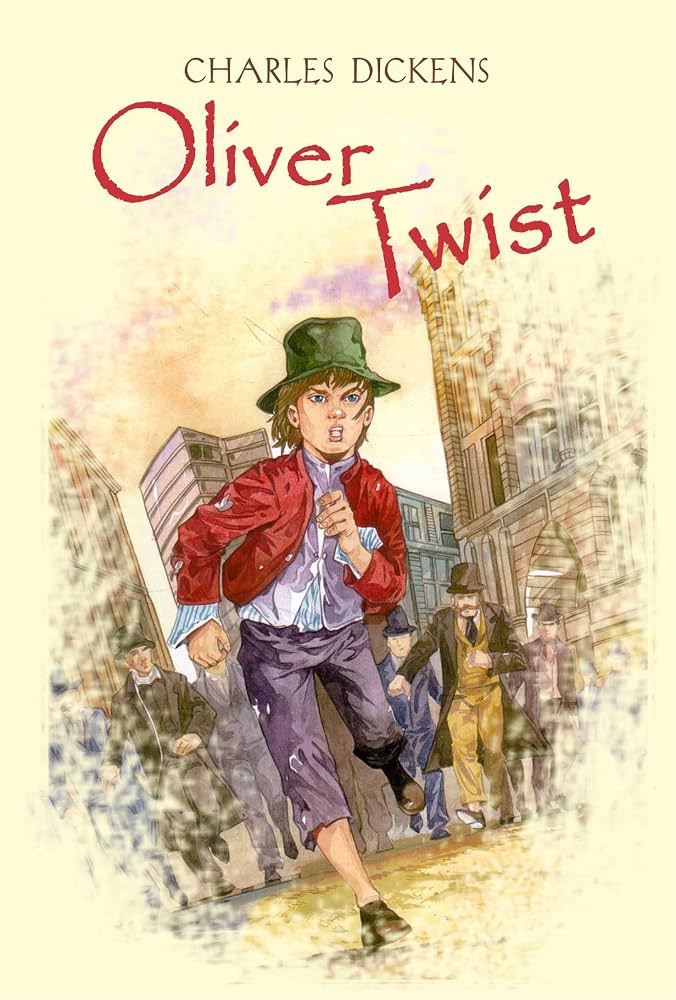
Charles Dickens’ classic novel, Oliver Twist, offers a powerful criticism of social inequality, poverty and prejudice, highlighting how society often judges disadvantaged individuals before giving them an opportunity to prove their character.
Published in serial form between 1837 and 1839, the novel tells the story of Oliver Twist, an orphaned boy born into poverty in a Victorian workhouse in England. From the beginning of his life, Oliver faces rejection, hunger, neglect and harsh treatment from a society that views poor people as burdens rather than individuals deserving of compassion.
Despite his innocence, Oliver is repeatedly subjected to suspicion and discrimination because of his disadvantaged background. His experiences expose the cruelty of a social system that often associates poverty with moral failure and criminal behaviour.
Through Oliver’s journey, Dickens raises an important question about the relationship between poverty, crime and social responsibility: does society simply punish criminal behaviour, or does its failure to protect vulnerable people contribute to the conditions in which crime thrives?
The novel explores this theme through characters such as Fagin, the leader of a group of young pickpockets who exploits homeless and vulnerable children by training them to steal. His criminal network illustrates how neglected children can become easy targets for exploitation when legitimate institutions fail to provide protection, care and opportunities.
However, Dickens does not suggest that poverty automatically produces criminal behaviour. Through Oliver’s character, he demonstrates that moral values and personal integrity cannot be determined by a person’s financial circumstances or social background.
The novel also exposes hypocrisy across social classes, showing that cruelty, greed and dishonesty are not limited to the poor, just as goodness and compassion are not exclusive to the wealthy.
Beyond its memorable characters and dramatic storyline, Oliver Twist serves as a criticism of Victorian England’s treatment of the poor, particularly the workhouse system and the social attitudes that denied disadvantaged children dignity and protection.
Dickens uses Oliver’s struggles to challenge the tendency to confuse a person’s circumstances with their character, arguing that individuals should not be condemned simply because they were born into poverty.
Nearly two centuries after its publication, Oliver Twist remains relevant to contemporary discussions about social justice, child protection, inequality, institutional neglect and the treatment of vulnerable members of society.
The novel ultimately raises a thought-provoking question: can justice truly be considered impartial when the poor are forced to prove their innocence and worth while the privileged are more readily given the benefit of the doubt?
Credit: Classic Literature