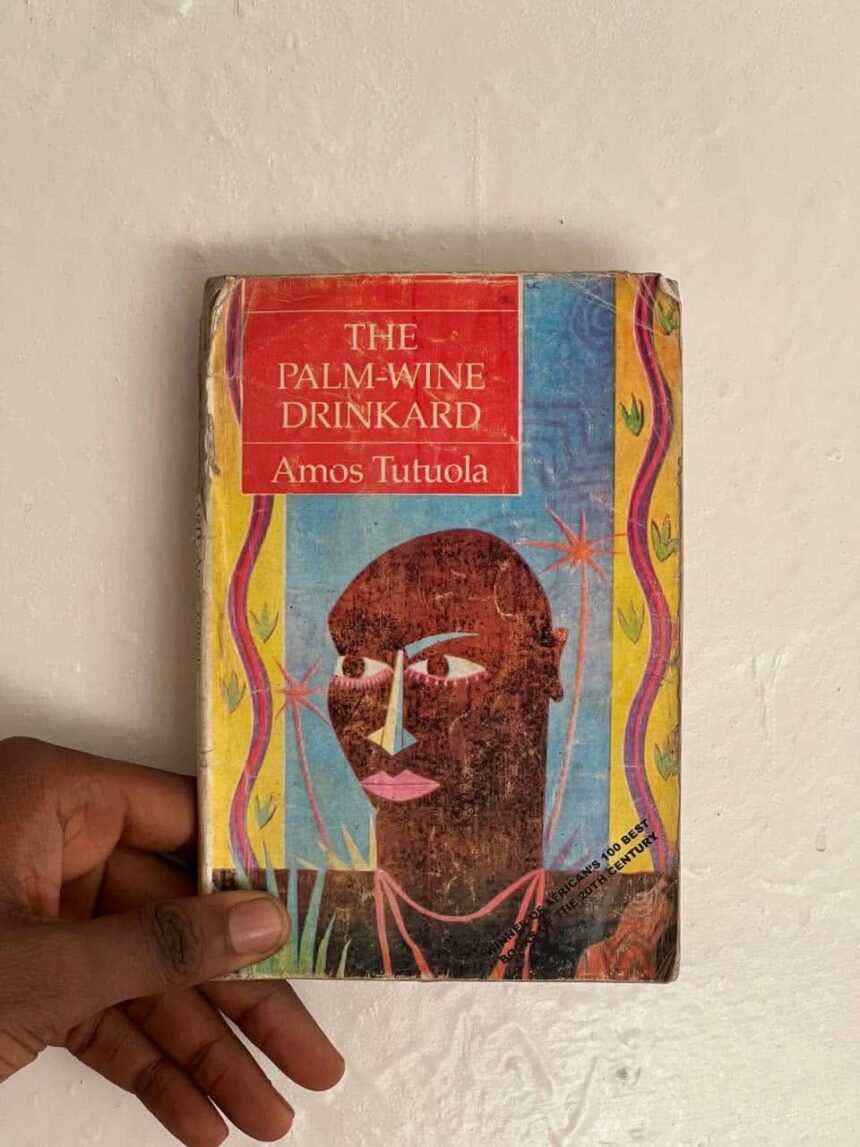
Amos Tutuola’s celebrated novel, The Palm-Wine Drinkard, published in 1952, remains one of the most distinctive works in African literature, renowned for its imaginative storytelling, rich Yoruba folklore and unconventional use of the English language.
The novel, whose full title is The Palm-Wine Drinkard and His Dead Palm-Wine Tapster in the Deads’ Town, was published in London by Faber and Faber. It gained international attention, particularly after receiving praise from renowned Welsh poet Dylan Thomas, who described it as “brief, thronged, grisly and bewitching.”
The story follows an unnamed protagonist whose life revolves around drinking palm wine. He consumes an extraordinary 225 kegs daily, supplied by his favourite palm-wine tapster, until tragedy strikes and the tapster dies.
Unable to accept the sudden end of his endless supply of palm wine, the protagonist embarks on a dangerous and supernatural journey into the mysterious African bush in search of his deceased tapster.
Armed with magical powers and traditional charms, he encounters strange creatures, supernatural forces and extraordinary situations that test his courage, intelligence and determination.
During his adventures, he even captures Death in a net, demonstrating the novel’s unusual blend of humour, fantasy and African spiritual beliefs.
One of the most remarkable episodes involves his encounter with the Complete Gentleman, a mysterious figure who rents different parts of his body and returns them piece by piece until he eventually becomes a walking skull. The protagonist later rescues a woman who becomes his wife from this strange character.
Throughout his journey, the drinkard encounters numerous supernatural beings and relies on unconventional methods to survive. Among his unusual experiences are selling his own death and renting out his fear in exchange for monthly payments.
His search eventually leads him to Deads’ Town, a mysterious world inhabited by the dead, where ordinary human experiences and natural laws are turned upside down. There, he discovers that the dead cannot return permanently to the world of the living.
Beyond its fascinating storyline, The Palm-Wine Drinkard is significant for its innovative storytelling style, which draws heavily on Yoruba oral traditions, folktales, mythology and supernatural beliefs.
Its unconventional use of English initially generated controversy, particularly among Nigerian literary critics who questioned its departure from established grammatical and literary conventions.
However, Tutuola’s distinctive approach eventually earned the novel international recognition, demonstrating that African stories could be told through indigenous imagination, cultural experiences and traditional narrative techniques without conforming entirely to European literary standards.
Today, The Palm-Wine Drinkard is regarded as a landmark in African literature and an important contribution to the development of modern African fiction. Its influence extends beyond Nigeria, offering international readers a fascinating introduction to African folklore, mythology and storytelling traditions.
More than seven decades after its publication, Tutuola’s masterpiece continues to stand out for its originality, cultural richness and fearless exploration of the boundaries between the human world and the supernatural.
Credit: African Literature, Classic Literature,Amos Tutuola