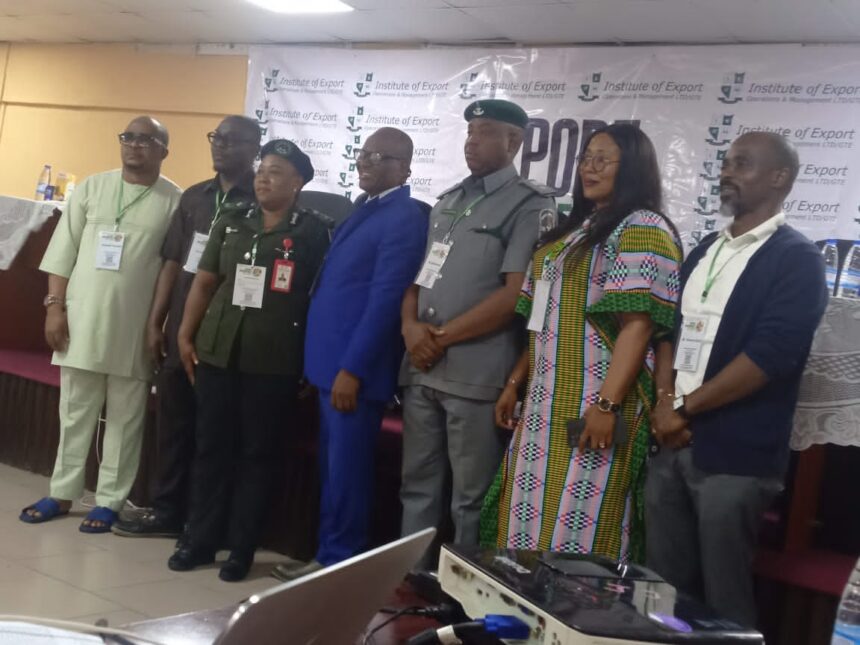
The Institute of Export Operations and Management (IEOM) has brought together regulators, exporters, freight forwarders, logistics operators and other stakeholders to investigate the circumstances surrounding the suspension and ban on Nigeria’s palm kernel shell (PKS) exports and develop strategies to restore confidence in the country’s non-oil export sector.
The suspension, which followed the discovery of maggot infestation in exported palm kernel shells, has raised concerns about weaknesses in Nigeria’s export inspection and certification processes, as well as the responsibilities of operators across the value chain.
At an Export Breakfast Meeting held on Tuesday in Port Harcourt, Rivers State, industry stakeholders examined the circumstances that led to the crisis, identified possible lapses and explored practical solutions to prevent a recurrence.
Speaking at the meeting, the Executive Secretary of IEOM, Dr Ofon Udofia, said the engagement was convened to establish where negligence occurred and identify measures to return Nigerian palm kernel shells to the international export market.
The meeting featured representatives of the Nigeria Customs Service (NCS), Neroli, freight forwarding and logistics companies, exporters, government agencies and other operators in the export value chain.
A panel session provided an opportunity for participants to examine issues surrounding export efficiency, regulatory compliance, inspection standards and transparency, with the ultimate goal of developing an “Export Without Stress” framework for Nigerian exporters.
Udofia said building a competitive non-oil export sector required collective responsibility and effective collaboration among regulatory agencies, service providers, logistics operators and private-sector players.
“At IEOM, we recognise that developing a competitive export sector requires more than the efforts of individual exporters. It requires effective collaboration among regulatory agencies, service providers, logistics operators and the private sector,” he said.
He described the meeting as an opportunity for stakeholders to share experiences and collectively identify practical ways of addressing persistent challenges within the export value chain.
“Our objective is not just to discuss problems but to leave with ideas and recommendations that can translate into tangible improvements in our export processes,” he added.
During the panel discussion, Dr Chineyere Okere, a prominent freight forwarder, and Magaji Muhammad of the Nigeria Customs Service stressed that improved operational efficiency, compliance and collaboration among value chain operators were essential to strengthening Nigeria’s non-oil export performance.
Jerome Nsikan of Neroli maintained that the infested palm kernel shells could not have passed through a properly conducted inspection process.
Okere, while acknowledging that such incidents could occur in any part of the world, called for increased vigilance and stricter monitoring to prevent similar occurrences.
Other contributors, including Gbalome Epiah and Ejimadu Onyema, also made interventions on the circumstances surrounding the export controversy.
Several participants called for a thorough investigation to establish the point at which the infestation occurred, while others demanded appropriate sanctions against individuals or organisations found responsible.
Ikechukwu Amajuoyi, a palm oil producer and entrepreneur, urged regulatory authorities investigating the incident to extend their inquiries to production and processing clusters, where he alleged that several operational lapses occurred.
Participants also questioned the credibility of certificates issued by inspection agencies responsible for clearing agricultural products for export, arguing that the incident had raised concerns about the effectiveness of existing quality assurance mechanisms.
Some stakeholders proposed the establishment of a final inspection centre where agricultural commodities would undergo comprehensive checks before being handed over to shipping companies.
A major concern raised by exporters was the need to establish accountability and ensure that individuals or agencies whose negligence leads to the rejection of exported commodities bear the financial consequences.
They argued that exporters should not be left to absorb huge losses arising from failures in inspection, certification, logistics or other services provided by third parties.
Expressing concern over the plight of exporters, Udofia described them as “orphans” who often have nowhere to turn when they suffer losses resulting from the failures of other operators within the export chain.
He called for a coordinated stakeholder action framework that would protect exporters from avoidable setbacks, costly errors and operational failures attributable to regulators and service providers.
According to him, a more responsive system of collaboration and accountability would help restore exporters’ confidence and strengthen Nigeria’s position in the international non-oil export market.
A highlight of the event was the presentation of merit awards to architect Dr Sokari George and business journalist Elder Ignatius Chukwu in recognition of their contributions.