The Edo State Ministry of Women Affairs and Social Development is set to partner with the Nigerian Correctional Service (NCoS) to strengthen the rehabilitation, empowerment and reintegration of inmates, with particular attention to women and young persons in conflict with the law.
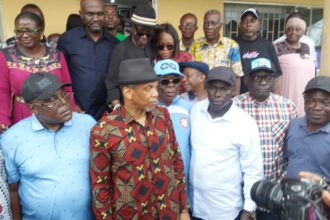
The proposed partnership was discussed when the Controller of Corrections, Edo State Command, CCS Julius Osemwegie, led a delegation of the NCoS on an official visit to the Ministry in Benin City.
During the meeting, both institutions explored areas of collaboration, including vocational and entrepreneurial training, education, sports, recreation, social welfare and non-custodial services.
Receiving the delegation on behalf of the Commissioner for Women Affairs and Social Development, Hon. Eugenia Abdallah, the Permanent Secretary of the Ministry, Mrs. Joy Ihensekhien, described the visit as timely and significant.
She said the mandates of both institutions were closely aligned, particularly in promoting rehabilitation, welfare and the restoration of vulnerable persons to productive and meaningful lives.
According to her, the Ministry was particularly interested in interventions targeting female inmates, vulnerable youths and juveniles in conflict with the law.
Ihensekhien assured the Correctional Service of the Ministry’s readiness to explore practical areas of collaboration, including the use of its existing skills acquisition centres to provide inmates with vocational and entrepreneurial skills that could enhance their capacity for self-reliance after release.
She said the Ministry would work with the NCoS to obtain relevant data on inmates and determine how existing programmes could be extended to custodial centres, including the facilities on Sapele Road in Benin City and in Auchi.
The Permanent Secretary also expressed the Ministry’s willingness to strengthen interventions at the Children Correctional Centre through sports, recreation, education and other programmes designed to support the rehabilitation and positive development of juveniles.
She recalled an earlier engagement between the Ministry and the Correctional Service on support for the juvenile correctional facility, noting that the relationship was particularly significant given the Controller’s previous academic research at the Edo State Juvenile Facility during his doctoral studies.
Earlier, the Controller of Corrections, CCS Osemwegie, said the visit was aimed at establishing a sustainable institutional relationship between the NCoS and the Ministry.
He stressed that collaboration between relevant government institutions was essential to achieving effective reformation, rehabilitation and reintegration of offenders.
Osemwegie also highlighted the growing importance of non-custodial measures, such as community service and suspended sentences, as modern approaches to correcting offenders, particularly first-time offenders, while reducing pressure on custodial facilities.
He emphasised the need to institutionalise the proposed partnership to ensure its sustainability beyond changes in leadership or the tenure of individual officials.
At the end of the meeting, both institutions agreed to hold follow-up technical engagements to identify priority areas, assess the needs and population of inmates, and develop a framework with clear timelines for implementation.