By Esada Uyono.
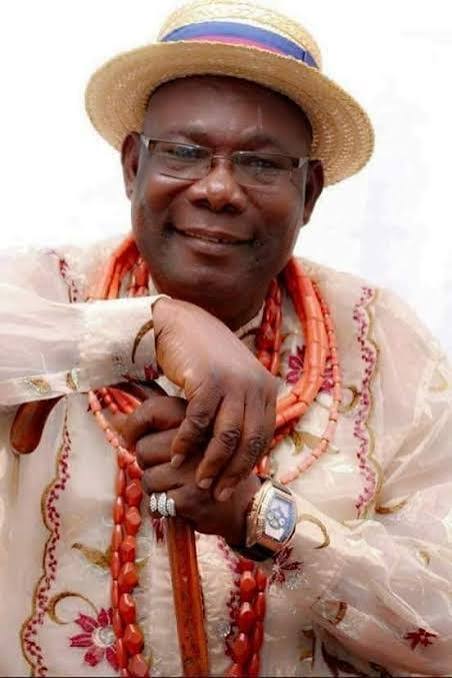
Chief Joe Orode Omene, President of the Traditional Chiefs of Urhobo Land Association and former President General of the Urhobo Progress Union (UPU), has appealed to the traditional rulers of Idjerhe and Mosogar kingdoms to urgently resolve the lingering ownership dispute over the site of the 1998 Jesse fire disaster through dialogue, warning that the disagreement could plunge the neighbouring communities into avoidable conflict.
Omene, who holds the traditional title of Ejorofo of Mosogar, made the appeal following renewed controversy over the ownership of the disaster site, after Mosogar Kingdom reportedly asserted its claim to the territory during activities marking the 28th anniversary of the tragedy. The claim subsequently attracted a counterposition from the Otota of Idjerhe Kingdom.
Expressing concern over the development, the Urhobo elder statesman said the two kingdoms had maintained cordial relations over the years and should not allow a boundary disagreement to destroy their longstanding historical ties.
“Those of us from these two kingdoms want peace, not war. We don’t want any situation that will bring about a crisis between the two kingdoms,” he said.
He urged the traditional rulers to demonstrate genuine commitment to the welfare of their people by meeting directly to discuss the disputed territory and finding a mutually acceptable solution before the disagreement escalates.
“If the two kings mean well for their kingdoms, what is it for them to do? They should meet and discuss the issue,” he stated.
Omene suggested that if direct engagement between the monarchs proved difficult, both kingdoms should constitute joint committees comprising credible representatives from the affected communities and independent persons from outside the area to examine the competing claims and recommend an amicable settlement.
“If the two of them cannot meet to discuss it, then they should set up committees. Bring people from the affected areas and also bring people from outside to meet and discuss it and look for a solution,” he added.
The elder statesman, however, expressed fears that internal challenges confronting the two traditional institutions could complicate efforts to resolve the dispute. He alleged that some individuals might be exploiting the boundary controversy to divert attention from unresolved problems within their respective kingdoms.
According to him, those promoting territorial sentiments could be using the dispute to rally public support and discourage people from demanding accountability over internal challenges.
“My concern is that some people want to hide under the cover of boundary disputes to tell their people that others are trying to take their land, so that everybody will rally around them and forget the internal crises in their kingdoms,” he said.
He warned that allowing the disagreement to generate hostility would be particularly unfortunate, given the extensive family, social and economic relationships connecting the people of both kingdoms.
“There are many people from Mosogar who have maternal relationships with Idjerhe. The same thing applies to people from Idjerhe. Who are we going to fight? Who is going to die that will bring happiness to anybody? Nobody,” he observed.
Omene questioned the wisdom of allowing a territorial disagreement to destroy relationships established over generations, insisting that neither community stood to benefit from confrontation.
He also recalled the peaceful leadership approach of previous traditional rulers in both kingdoms, noting that their predecessors maintained cordial relationships and discouraged boundary disagreements from becoming sources of division.
According to him, the former monarchs consistently prioritised unity and peaceful coexistence whenever territorial disagreements arose between communities under their kingdoms.
“Whenever you brought any boundary matter to them, they would rather encourage the communities to forget the dispute than allow it to separate the two kingdoms. Their position was that both communities should remain together,” he recalled.
Drawing parallels with the historical conflict between Ife and Modakeke communities in Osun State, Omene cautioned that unresolved territorial disagreements could degenerate into violent confrontations, leading to the loss of lives and destruction of property.
He maintained that even communities that had endured years of violent conflict would eventually have to return to dialogue and peaceful coexistence, making it unreasonable for Idjerhe and Mosogar to follow a similar path.
The traditional chief further warned against using the boundary controversy to intimidate residents who had legitimately acquired land, built houses or established businesses in either kingdom.
He questioned whether people who had invested their resources in properties across the two communities could suddenly be denied access to their homes because of disagreements over territorial ownership.
“Many people from Idjerhe have investments and properties in Mosogar. Is Mosogar going to tell them that their properties no longer belong to them or that they cannot access their houses? It is not possible,” he said.
He stressed that the same consideration should be extended to Mosogar indigenes with properties and business interests in Idjerhe, warning that any action capable of threatening residents’ security and legitimate investments should be avoided.
While acknowledging that land disputes could become more sensitive when valuable natural resources, particularly oil, were involved, Omene questioned the justification for allowing the present disagreement to undermine the relationship between the two kingdoms.
He urged the traditional rulers to take the initiative in resolving the matter, adding that either party could seek government intervention if genuine attempts at dialogue failed.
“If one person is willing to meet and the other refuses, the person who is willing is free to report to the government that the issue could bring about a crisis and that efforts to resolve it through dialogue have not succeeded,” he said.
Omene called on both kingdoms to exercise restraint and prioritise the safety and welfare of their people, warning that innocent residents should not become victims of a disagreement that responsible traditional leadership could resolve through dialogue and mutual understanding.