By Edesiri Ofomala
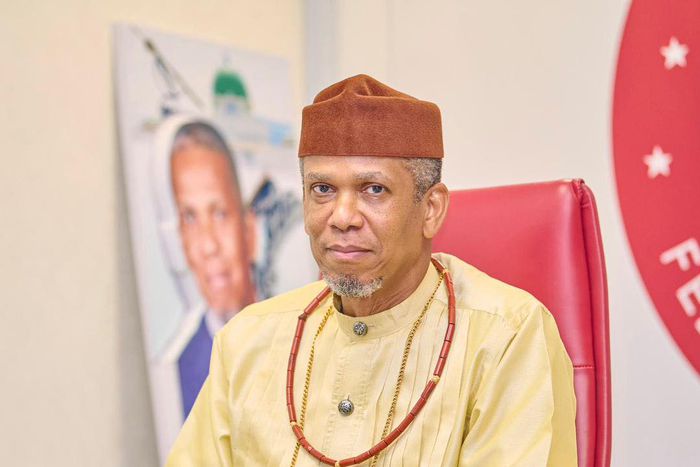
In Nigerian politics, it is often easy to distinguish between those who speak about the people and those who genuinely carry their concerns as a personal responsibility. From repeated encounters listening to Senator Ede Dafinone speak on the Urhobo people, one impression remains consistent: his approach to leadership is rooted not in performance, but in purpose.
For him, public service appears to be less about political visibility and more about responsibility. His words and actions reflect a steady focus on a central question: how can his people move forward?
Within his first year in the Senate, his efforts suggest a pattern of deliberate and people-focused engagement. Rather than relying solely on rhetoric, his record points to interventions, advocacy, and follow-through.
During the Okuma crisis, a period marked by tension and uncertainty, Senator Dafinone took an active role in engagement and resolution efforts. His involvement contributed to the release of the King of the Ancient Ewu Kingdom in Ughelli South, HRH Clement Ogenerukevwe Ikolo, helping to ease tensions in the affected communities. He also intervened in the case of Pa Dennis Okugbaye, whose detention had raised concern, and supported relief efforts for impacted residents.
Beyond crisis response, his attention has extended to structural issues affecting constituents. Concerns around career stagnation among Urhobo personnel in agencies such as Customs, Immigration, and the Police were not only acknowledged but pursued. Through engagements with relevant institutions, several long-delayed promotions were reportedly addressed, bringing renewed morale to affected officers and their families.
His legislative representation has also included economic advocacy. The Sapele Seaport project has been elevated in national discussions following his engagement with the presidency and consultations with the Minister of Marine and Blue Economy. These efforts have helped sustain attention on the port’s rehabilitation as a potential driver of economic growth in Delta Central.
On an individual level, accessibility remains a recurring theme. Through recommendations and facilitation, constituents have reportedly gained opportunities in institutions such as NELFUND, the National Hospital Jabi, and other sectors, reflecting a hands-on approach to representation.
Equally notable is his listening style. In a political environment often characterised by top-down communication, he appears to maintain an open channel with constituents, ensuring that concerns are heard and, where possible, addressed.
Taken together, these actions portray a leadership style built on consistency, measured engagement, and visible outcomes. While the broader political landscape continues to evolve, his approach suggests an emphasis on steady service over spectacle.
It is on this basis, as observed by Edesiri Ofomala of Ward 10, Sapele LGA, that Senator Ede Dafinone is presented as a strong and continuing choice for Delta Central in the 11th Senate.