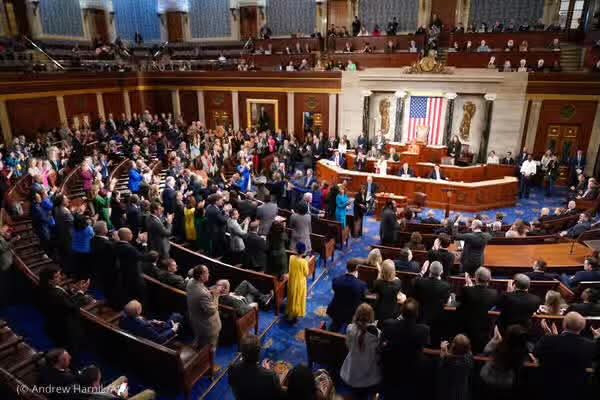
U.S. lawmakers sharply challenged the Nigerian government’s characterization of ongoing massacres across the country, describing the violence as “escalating,” “targeted,” and overwhelmingly directed at Christians during a rare joint congressional briefing on Wednesday.
The closed-door session—organized by House Appropriations Vice Chair Mario Díaz-Balart as part of a Trump-ordered inquiry—focused on recent killings and what Congress has deemed Abuja’s “deeply inadequate” response. President Trump tasked lawmakers, led by Reps. Riley Moore and Tom Cole, with producing a detailed report on the persecution of Nigerian Christians and has even raised the possibility of U.S. military intervention against Islamist groups responsible for the attacks.
Vicky Hartzler, chair of the U.S. Commission on International Religious Freedom, told lawmakers that religious freedom is “under siege” in Nigeria. She highlighted widespread abductions of schoolchildren and attacks in which “radical Muslims kill entire Christian villages and burn churches.” Hartzler said abuses are “rampant” and “violent,” claiming Christians are targeted at “a 2.2 to 1 rate” compared with Muslims.
Although Nigeria recently reassigned 100,000 police officers from VIP protection duties to general security work, Hartzler warned that the country is entering “a coordinated and deeply troubling period of escalated violence.” She urged the United States to impose targeted sanctions, visa bans, and asset freezes, and to tighten conditions on aid. Abuja, she said, must also reclaim villages seized from Christian communities so displaced widows and children can return home.
The most forceful criticism came from Dr. Ebenezer Obadare of the Council on Foreign Relations, who dismissed the Nigerian government’s assertion that the killings are not religiously motivated. Calling the claim that extremists attack Muslims and Christians equally a “myth,” Obadare argued the groups operate for “one reason and one reason only: religion.” He said higher Muslim casualty figures often reflect geography, not equal targeting.
Obadare described Boko Haram as fundamentally anti-democratic and said Nigeria’s military is “too corrupt and incompetent” to dismantle jihadist networks without firm external pressure. He urged Washington to demand the disbandment of armed religious militias, confront entrenched security-sector corruption, and respond quickly to early warning signs of violence.
Sean Nelson of ADF International added that Nigeria is “the deadliest country in the world for Christians,” claiming more Christians are killed there than in all other countries combined—and at a rate “five times” higher than Muslims when accounting for population. He noted that extremists also kill Muslims who reject violent ideology, undermining Abuja’s argument that the crisis is driven mainly by crime or communal clashes.
Nelson called for stricter oversight of U.S. aid and recommended that some assistance be routed through faith-based organizations to reduce corruption. Without “transparency and outside pressure,” he warned, “nothing changes.”