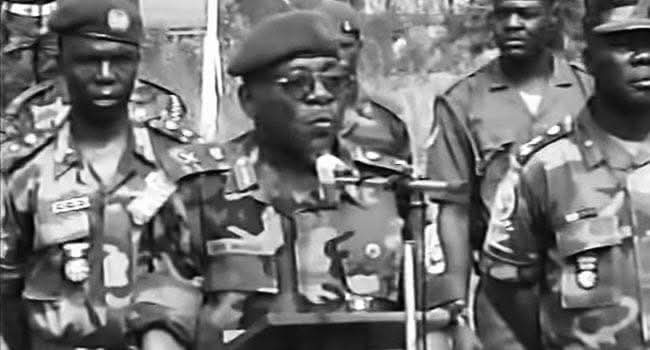
The Victor Malu Military Tribunal was a seven member Special Military Tribunal set up in 1997 by the administration of Sani Abacha. It was chaired by Victor Malu and sat in Jos, in present day Plateau State. Its mandate was to investigate the alleged coup plot against Abacha’s government and to determine the roles played by both military officers and civilians.
On 21 December 1997, Abacha formally constituted the tribunal following reports of a planned coup. Among those accused were the former Deputy Head of State, Oladipo Diya, alongside senior officers such as Major General Tunji Olanrewaju and Major General Abdulkareem Adisa, as well as several civilians including Professor Femi Odekunle, who served as Diya’s political adviser. Proceedings began on 14 February 1998, after a wave of arrests that targeted eight high ranking military officers and their alleged collaborators.
The tribunal eventually charged Diya, five other soldiers, and one civilian with treason. Death sentences by firing squad were handed down to the principal accused, while others received varying prison terms ranging from a few years to life imprisonment. These verdicts reflected the seriousness with which the Abacha regime treated threats to its authority.
The tribunal’s decisions sparked widespread reactions both within Nigeria and internationally. Families of the accused publicly pleaded for clemency. The father of General Abdulkareem Adisa appealed directly to Abacha to spare the lives of those sentenced. Civil society groups also raised concerns. The National Democratic Coalition, through its leader Abraham Adesanya, questioned the credibility of the trial and expressed doubt about the guilt of the accused. Religious bodies such as the Christian Association of Nigeria similarly called on the government to show mercy.
In the end, the tribunal became one of the most controversial episodes of Abacha’s rule, highlighting both the climate of political tension at the time and the broader concerns about justice and due process under military governance in Nigeria.
Credit: North Book, Historical Nigeria-Yoruba,