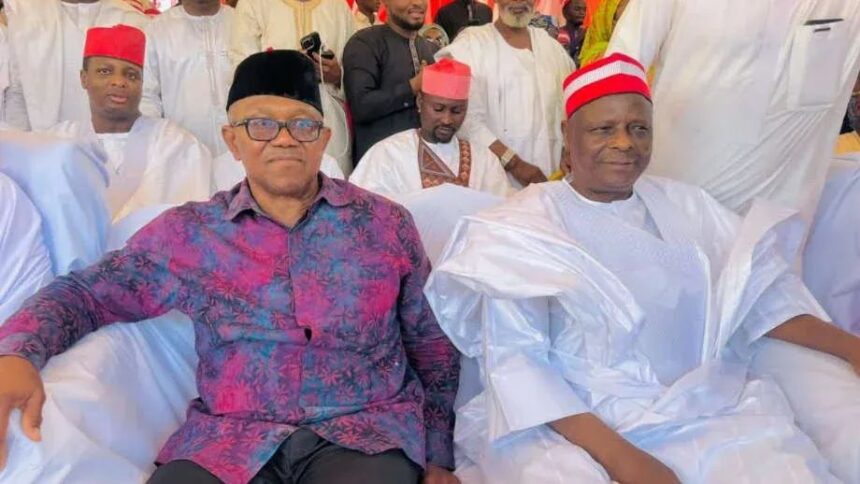
Fresh divisions have emerged within the OK Movement, a political support platform established to rally support for the proposed presidential ticket of National Democratic Congress Peter Obi and former Kano State Governor Rabiu Kwankwaso, following a leadership dispute that has sparked competing claims and internal wrangling.
The crisis deepened after the movement announced the appointment of former Chairman of the Inter-Party Advisory Council (IPAC), Peter Ameh, as its National Director-General.
The announcement was contained in a statement signed by Jackie Wayas, who described herself as the National Convener of the movement. According to her, Ameh’s appointment was approved by the steering committee in recognition of his political experience, leadership credentials and commitment to the objectives of the organisation.
However, the announcement immediately triggered controversy, with several members questioning Wayas’ authority to act as the movement’s National Convener and demanding clarification on her emergence in the role.
Efforts to obtain a response from Wayas on the circumstances surrounding her appointment were unsuccessful, as calls and messages sent to her were not returned as of the time of filing this report.
The disagreement has since exposed a broader leadership crisis within the movement, with members expressing differing views over the group’s internal structure and decision-making process.
Reacting to the development, the immediate past National Publicity Secretary of the OK Movement, Justin Ijeh, acknowledged that disagreements exist but maintained that they should be resolved internally to avoid distracting from the movement’s political objectives.
“There is a reason I have not spoken publicly on this issue,” Ijeh said. “Some matters are better resolved behind closed doors. Our primary focus should be achieving our goal at the polls.”
While admitting that disagreements are inevitable in political organisations, he warned against allowing internal conflicts to play out in the public space.
“It is okay to have disagreements, but taking them to the public is not the best approach. The attention this issue has received makes it appear much bigger than it actually is,” he said.
According to Ijeh, the dispute centres largely on differing opinions over the management and direction of the movement rather than any fundamental ideological differences.
He urged members to prioritise unity and dialogue, stressing that resolving the internal disagreements would strengthen the movement ahead of future political engagements.
Credit: Punch