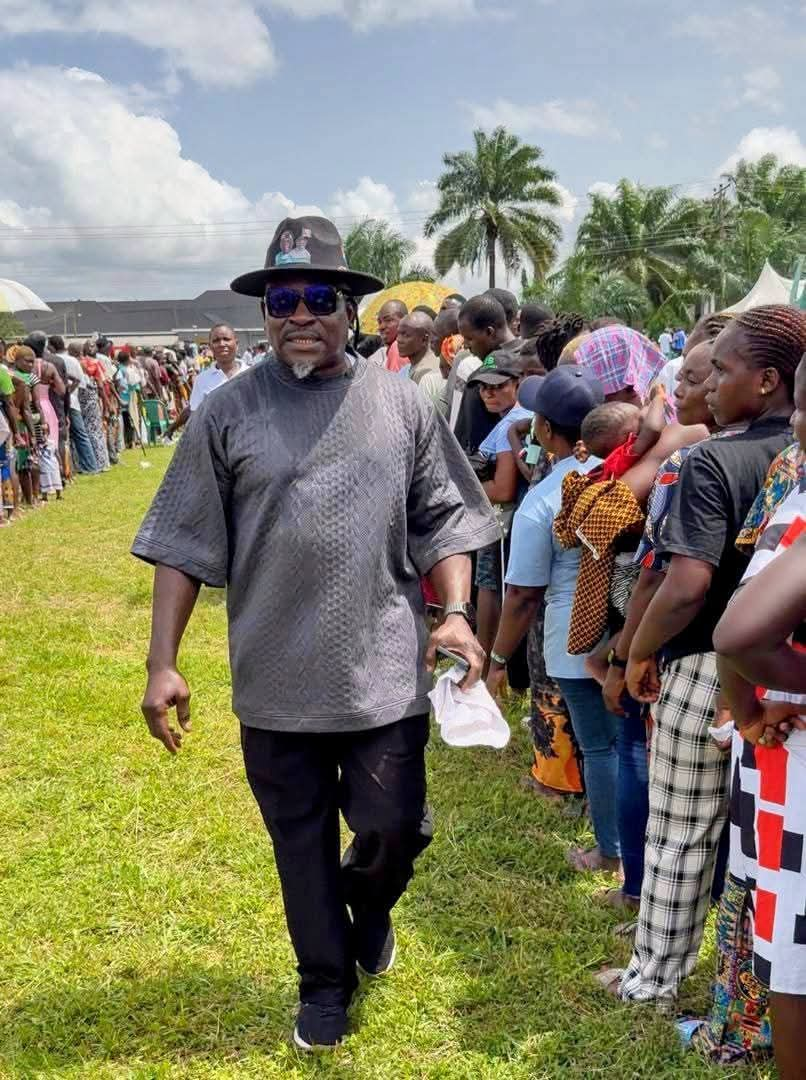
By Festus Tony
Calls have intensified for a thorough fact-finding process into the circumstances surrounding the suspension and subsequent remand of Hon. Izeze Rume Reuben, amid concerns over the events that reportedly preceded the development.
The controversy has generated reactions within political circles, with some stakeholders urging Delta State Governor, Rt. Hon. Sheriff Oborevwori, to ensure that the matter is handled with fairness, restraint and due process.
According to accounts circulating within political circles, the dispute may have been preceded by an incident at an event where Izeze was reportedly seated when a protocol officer approached him and requested his seat.
Sources familiar with the incident claimed that Izeze did not immediately respond to the request and that a confrontation subsequently occurred. The same sources alleged that the situation escalated before people around the commissioner intervened.
However, the precise circumstances surrounding the incident remain unclear, and the claims could not be independently verified.
There have also been reports of a subsequent encounter at another gathering involving the same individuals. While there is no established evidence that the appearance of additional personnel was intended to intimidate anyone, the development reportedly heightened concerns among those present.
Against this background, some political observers have questioned whether a comprehensive fact-finding exercise should have preceded the suspension, arguing that establishing the sequence of events and the conduct of all parties would help prevent a one-sided interpretation of the dispute.
The argument is not that anyone should be excused for misconduct.
If allegations of physical confrontation or other inappropriate conduct are established after a fair investigation, appropriate disciplinary measures should follow, regardless of the individuals involved.
At the same time, political leaders and public officials are expected to exercise restraint, particularly in situations involving disagreements, protocol and competing interests.
The controversy has also renewed discussions about the importance of political relationships and internal conflict-resolution mechanisms within the administration.
Supporters of Izeze have described him as a politician who has worked to build relationships across political divides and mobilise support for the administration. They argue that his political contributions should be taken into consideration in resolving the current situation.
However, such contributions, even where established, should not exempt any public official from accountability or the rule of law.
Similarly, any concerns or allegations involving other individuals connected to the dispute should be properly investigated rather than assumed to be established facts.
The development has continued to generate significant reactions on social media and among political stakeholders, with some expressing support for Izeze while others calling for restraint and an objective examination of the circumstances.
The situation underscores the need for political office holders and their aides to maintain mutual respect and avoid confrontations that could escalate into broader political disputes.
For Governor Oborevwori, the challenge is to ensure that the matter is resolved without creating the impression that either party is being unfairly targeted.
The priority, therefore, should be a transparent fact-finding process, fairness to all concerned and a political resolution capable of addressing whatever underlying disagreement may have contributed to the crisis.
Delta State, stakeholders say, needs political maturity and dialogue at this time—not further escalation.
The objective should not be to sacrifice either individual, but to establish the facts, uphold accountability where necessary and restore mutual respect within the political structure.
Festus Tony