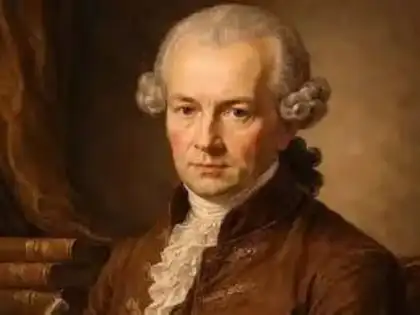
By Staff Reporter
The call to “Dare to know!” ( Sapere aude ) is more than a famous philosophical phrase. More than two centuries after German philosopher Immanuel Kant used it in his 1784 essay An Answer to the Question: What Is Enlightenment?, the idea has gained fresh relevance in an age defined by artificial intelligence, social media, misinformation and an endless stream of competing opinions.
Kant argued that enlightenment begins when people have the courage to use their own understanding without allowing others to think for them. For him, the problem was not a lack of intelligence but a failure of courage. People often remain dependent on authorities, traditions and institutions because thinking independently requires effort and responsibility.
His challenge was therefore simple but demanding: think for yourself.
Kant’s Ethics: Freedom, Duty and Human Dignity
Kant’s philosophy extended well beyond the question of intellectual independence. His ethical theory placed reason, freedom and human dignity at the centre of moral life.
One of his most influential ideas was the categorical imperative, the principle that moral actions should be guided by rules that could reasonably apply to everyone. In simple terms, before acting, a person should ask whether the principle behind the action could be accepted as a universal rule.
For example, if everyone treated promises as meaningless whenever it was convenient, the institution of promising itself would lose its purpose. Kant therefore believed morality could not simply depend on personal desires, convenience or the consequences we hoped to achieve.
Another important part of Kant’s ethics is his insistence that human beings must be treated as ends in themselves, never merely as means. People possess dignity because they are rational and autonomous beings capable of making moral choices.
That idea has powerful implications for contemporary society. It challenges political leaders, businesses, educators, technology companies and individuals to ask whether people are being respected as autonomous human beings or simply being manipulated for profit, votes, influence or attention.
The Courage to Think in the Digital Age
Kant’s Sapere aude takes on a different but equally important meaning in the modern information environment.
Today, people are rarely short of information. The challenge is determining which information deserves to be believed.
A social-media post can reach millions before its claims have been verified. Algorithms can repeatedly expose users to material that confirms what they already believe. Artificial intelligence can generate convincing text, images and videos, while misinformation can travel faster than careful fact-checking.
In such an environment, independent thinking requires more than having access to information. It requires the willingness to question, investigate and revise one’s beliefs.
This is where Kant’s philosophy connects directly with modern critical thinking.
What Does “Dare to Know” Mean Today?
In practical terms, Kant’s challenge can be translated into several habits of critical thought.
Question the source. Who produced the information? What evidence supports the claim? Does the source have expertise or a reason to persuade you?
Separate facts from opinions. A confident statement is not necessarily a factual statement. Critical thinkers distinguish evidence from interpretation and assertion.
Look for evidence that challenges your assumptions. Independent thinking is not simply rejecting authority or disagreeing with everyone. It means being willing to discover that you may be wrong.
Resist intellectual shortcuts. Convenience can make it tempting to accept whatever a respected leader, influencer, teacher, political movement or algorithm tells us. Kant’s philosophy reminds us that intellectual maturity requires personal effort.
Use reason responsibly. Thinking for yourself does not mean believing whatever you want. It means subjecting beliefs to evidence, logic and reflection.
Freedom Does Not Mean Rejecting Expertise
There is an important distinction between thinking independently and thinking in isolation.
Kant was not advocating ignorance or suggesting that individuals should reject all experts. Modern society depends on specialised knowledge. Doctors, scientists, engineers, historians, journalists and other professionals possess expertise that individuals cannot independently reproduce in every field.
Critical thinking therefore does not require us to know everything ourselves. Instead, it requires us to evaluate authorities intelligently: What evidence supports their conclusions? Are their methods credible? Are competing perspectives being considered?
The mature thinker can say, “I trust this expert because the evidence and reasoning are persuasive,” rather than simply, “I believe this because someone told me so.”
From Enlightenment to the Age of AI
The emergence of artificial intelligence makes Kant’s warning even more significant.
AI systems can help people research, analyse and generate ideas, but they can also encourage intellectual passivity if users accept generated answers without questioning them.
The danger is not that machines will think for humanity. The deeper danger is that humans may become comfortable surrendering their own judgment.
Kant’s philosophy offers a useful principle for navigating this new landscape: technology should expand human reasoning, not replace human responsibility.
Whether the information comes from a teacher, politician, search engine, social-media influencer or AI system, the individual remains responsible for deciding what to believe and how to act.
The Enlightenment Is Still an Unfinished Project
Kant’s Sapere aude was ultimately a call for intellectual maturity. Freedom, in his view, was closely connected to the capacity to reason publicly and responsibly.
More than 240 years later, that challenge remains unresolved.
The modern citizen has unprecedented access to information but also unprecedented exposure to manipulation. The ability to think independently is therefore not merely an academic skill. It is a civic and ethical responsibility.
To “dare to know” today means refusing both blind obedience and blind skepticism. It means asking questions without assuming every answer is false, following evidence without surrendering judgment, and remaining humble enough to change one’s mind when better evidence emerges.
Kant’s message remains strikingly contemporary: the freedom to think is valuable only when we have the courage to use it.
In an age of algorithms, misinformation and artificial intelligence, perhaps the most important form of independence is still the simplest one:
Dare to think. Dare to question. Dare to know.
Credit: Emmanuel kant,