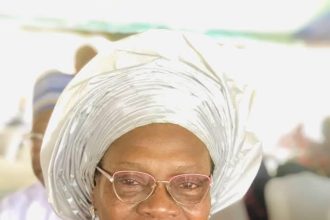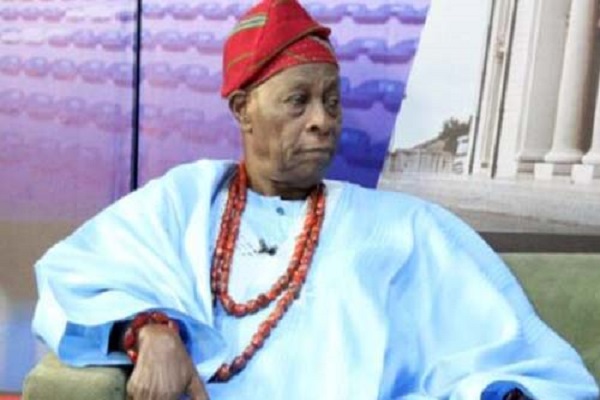
Chief Olu Falae, the economist, former government minister, pro-democracy activist and elder statesman, clocks 88 today, September 21, 2026.
Born on September 21, 1938, in Ilu-Abo near Akure, Ondo State, Falae has had a remarkable career spanning Nigeria’s civil service, military governments, partisan politics and the pro-democracy struggle.
According to a profile published by Ethnic African Stories, Falae studied Economics at the University of Ibadan before joining the Federal Civil Service, where he rose through the ranks of the country’s economic and planning institutions and eventually became a Permanent Secretary.
In 1986, the military government headed by General Ibrahim Babangida appointed Falae Secretary to the Federal Military Government. He later became Minister of Finance and Economic Development in 1989, placing him at the centre of Nigeria’s economic management during the Babangida administration.
His political journey took a dramatic turn following the annulment of the June 12, 1993 presidential election, widely regarded as having been won by Chief M.K.O. Abiola.
Falae became involved in the pro-democracy movement and was among prominent Nigerians associated with the National Democratic Coalition (NADECO), which campaigned for the restoration of democratic rule and recognition of the June 12 mandate.
His opposition to military rule eventually led to his arrest. On January 9, 1997, security agents arrested Falae at his residence in Akure. His detention was reportedly connected to investigations into bomb attacks.
Amnesty International subsequently expressed concern over his detention and the absence of formal charges, identifying him as a possible prisoner of conscience.
Falae later recalled spending an extended period in detention, including at Alagbon Close, Lagos, during the military era.
Following the sudden death of General Sani Abacha in June 1998, General Abdulsalami Abubakar became Head of State and began releasing political detainees. Falae was among those freed.
Just months later, he returned to electoral politics and emerged as the presidential candidate of the Alliance for Democracy (AD) and All People’s Party (APP) joint ticket in the 1999 presidential election.
He contested against former military Head of State, Olusegun Obasanjo, who ran on the platform of the Peoples Democratic Party (PDP), but lost the election.
Kidnapped at 77
Falae’s eventful life took another dramatic turn on his 77th birthday in 2015.
According to reports at the time, he was abducted from his farm in Ondo State on September 21, 2015. His abductors reportedly demanded a ransom of ₦100 million.
He was released after spending three days in captivity.
Three years later, in January 2018, several hectares of his oil-palm plantation were reportedly destroyed by fire. Contemporary reports attributed the incident to suspected herders, although the perpetrators were not immediately established by the police.
The incidents further thrust Falae into public discussions over insecurity and the increasingly contentious farmer-herder conflict in Nigeria.
Beyond his presidential ambition and pro-democracy activism, Falae later served as National Chairman of the Social Democratic Party (SDP), while continuing to advocate restructuring and what he described as true federalism.
His contributions to Nigeria’s public life have also earned him national recognition. In 2008, he was honoured with the Grand Commander of the Order of the Niger (GCON), one of Nigeria’s highest national honours.
At 88, Falae’s life remains a reflection of some of the defining chapters in Nigeria’s political history—from serving under military rule to becoming a prominent opponent of military dictatorship, enduring detention and later participating in the country’s return to democratic rule.
Happy 88th birthday to the elder statesman.