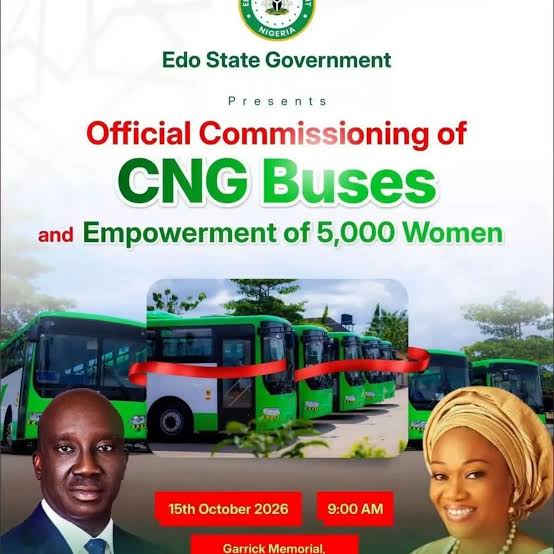
The rollout of 50 compressed natural gas (CNG) buses by the Edo State Government has sparked questions about the availability of supporting infrastructure, including refuelling stations, maintenance facilities and trained personnel needed to sustain the fleet.
The initiative, associated with Governor Monday Okpebholo’s administration, has drawn criticism over whether adequate preparations have been made to ensure that the buses operate efficiently beyond their formal commissioning.
Critics argue that while the introduction of CNG-powered buses could improve public transportation and reduce dependence on conventional fuels, the success of the initiative will depend largely on the availability of reliable gas supply, accessible refuelling facilities and a functional maintenance network.
They have also called for clarification on the number and locations of CNG refuelling stations currently available across Edo State, particularly along major routes connecting Benin City, Auchi and Ekpoma.
Beyond the initial rollout, questions have been raised about the availability of trained drivers, technical personnel and maintenance workshops capable of supporting the fleet over the long term.
The concerns have prompted calls for the state government to provide detailed information on the project’s implementation plan, including the readiness of its supporting infrastructure, operational costs and measures to ensure the buses remain in service.
While commissioning ceremonies often mark the public introduction of government projects, critics maintain that the long-term value of the CNG bus initiative will ultimately depend on its operational performance and accessibility to residents.
They argue that infrastructure planning should go hand in hand with the acquisition of vehicles to prevent disruptions and ensure that public funds deliver lasting benefits.
The state government is therefore being urged to clarify its plans for expanding CNG refuelling capacity, maintaining the vehicles and ensuring a consistent gas supply across the intended transport network.
The development also highlights a broader policy question: how can state governments ensure that investments in cleaner public transportation are supported by the infrastructure and technical capacity required for long-term success?
For Edo residents, the key concern is whether the new buses will translate into reliable, affordable and accessible transportation services.
Ultimately, the success of the initiative will be measured not by the commissioning ceremony alone, but by the buses’ availability, reliability and impact on commuters across the state.
Credit: Destiny O. Enabulele, MA