By Staff Reporter
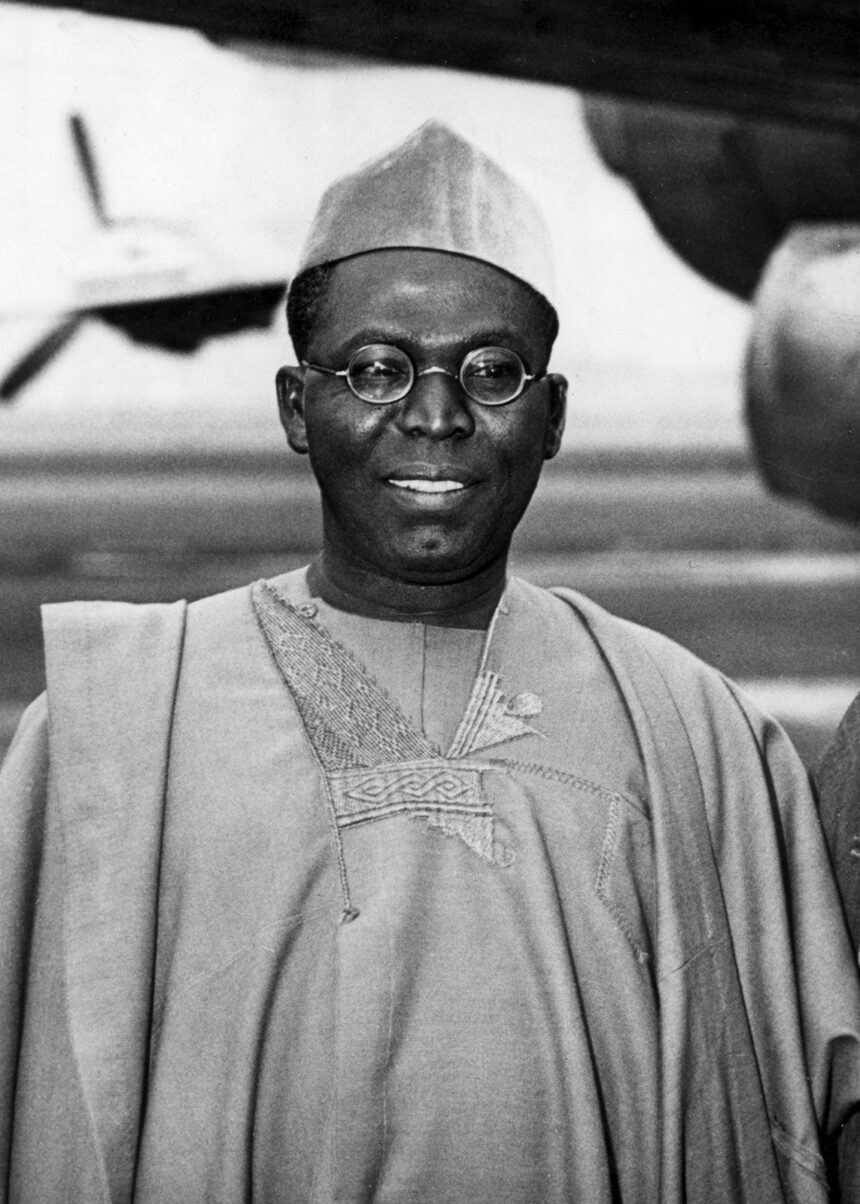
As Nigeria marks its 66th independence anniversary, a decades-old reflection attributed to former Western Region Premier, Chief Obafemi Awolowo, has resurfaced, drawing attention to his views on leadership, public service and political accountability.
Awolowo, who died on May 9, 1987, reportedly made the remarks during the twilight of his life while speaking with Nigerian philosopher Professor Moses Akinola Makinde.
In the account attributed to Makinde, Awolowo recalled his approach to selecting ministers and senior officials during his tenure as Premier of the Western Region.
“As the Premier of the Western Region I chose my ministers on merit and because of their education, standard and discipline.”
He reportedly went on to describe the standards he expected from members of his administration, saying ministers, advisers and senior civil servants were required to thoroughly prepare before appearing before the cabinet or other important government meetings.
“Every minister or adviser and top civil servant had to do his homework properly before bringing anything to a cabinet meeting or any other important meeting where it will be subjected to rigorous debate,” the statement attributed to Awolowo reads.
According to the account, Awolowo also stressed the importance of seeking expert opinions where issues were unclear, arguing that such input was necessary to promote objectivity in government decision-making.
“Where there are grey areas, expert opinion would be sought for the purpose of objectivity,” he was quoted as saying.
Awolowo further reportedly emphasised that public officials had a responsibility to follow established procedures and ensure that government decisions were guided by the public interest.
“As the Premier, I had to follow all procedures vigorously, and meticulously, always relating our decisions and actions to the public good,” he said, according to the account.
The former Premier then contrasted his conception of public office with what he regarded as an emerging culture of political indulgence.
“It is because of this service to the public that I often maintained that the office of the President or Prime Minister is not for pleasure,” Awolowo was quoted as saying.
He reportedly added:
“Unfortunately, in Nigeria, it looks as if the office of the President, Minister, Adviser is for pleasure, like dining and wining and carousing with women of easy virtue both at home and at abroad.”
Nearly four decades after Awolowo’s death, the remarks have resurfaced amid renewed discussions about the responsibilities of political office holders and the standards expected of those entrusted with public resources.
For many Nigerians, the passage has become notable not only because of its criticism of political culture, but also because of its emphasis on preparation, merit, discipline, expert advice and the public good as principles of governance.
The continued circulation of the remarks has also prompted reflection on whether the standards Awolowo described in relation to his administration remain relevant to contemporary Nigeria.
Awolowo served as the first Premier of the Western Region from 1952 until 1959 and remained one of Nigeria’s most prominent political figures in the country’s First Republic.
His political philosophy and record continue to generate debate decades after his death, while his writings and speeches are frequently revisited in discussions about governance, development and public administration in Nigeria.
As the country reflects on 66 years of independence, the resurfacing of Awolowo’s reported words offers another opportunity to examine the enduring question of what public office should represent: personal privilege, or service to the people.
Credit: Ethnic African Stories