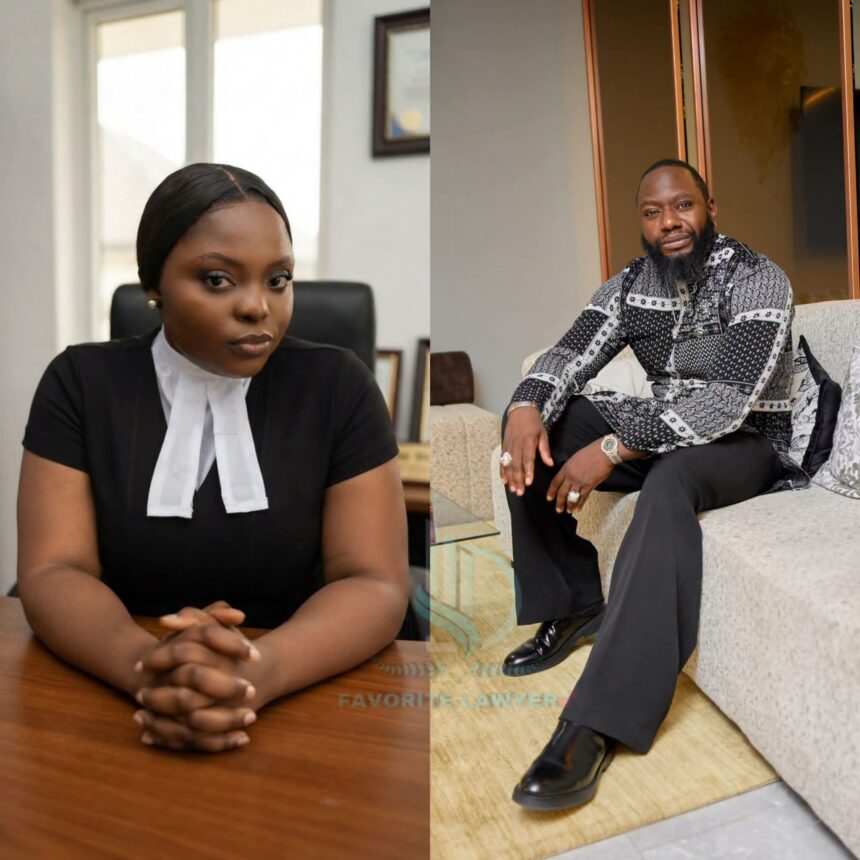
A legal commentator, Confidence Aribibia, has explained that founders of churches and non-governmental organisations do not automatically acquire personal ownership of such institutions or their assets by registering them with the Corporate Affairs Commission (CAC).
Aribibia said churches registered as incorporated trustees under Part F of the Companies and Allied Matters Act (CAMA) 2020 become separate legal entities, with identities distinct from their founders, trustees and other members.
She made the clarification while commenting on the leadership dispute involving the Fountain of Life Church, founded by the late Pastor Taiwo Odukoya, which has raised questions about succession, trusteeship and control of church property.
According to her, Section 830 of CAMA provides for the incorporation of trustees as a body corporate, giving the organisation the capacity to own property, sue and be sued, and enjoy perpetual succession.
She explained that the legal status means a church can continue to exist independently of its founder, including after the founder’s death.
Aribibia stressed that the founder of a church does not automatically become the personal owner of its assets, regardless of the financial contributions made towards establishing the organisation or constructing its facilities.
Citing Section 838 of CAMA, she said the income and property of an incorporated association must be applied towards the promotion of its stated objectives rather than treated as the personal assets of its founder, pastor or trustees.
On the responsibilities of trustees, Aribibia explained that Section 823 provides for the appointment of at least two trustees for the incorporation of an association.
She noted that trustees are expected to perform their responsibilities in accordance with the law and the organisation’s constitution, adding that their positions do not automatically make them owners of the church or its properties.
She also distinguished between the offices of the Senior Pastor and Chairman of the Board of Trustees, explaining that the two positions are separate and do not necessarily have to be occupied by the same individual.
Addressing succession disputes, Aribibia maintained that being the biological child of a church founder does not automatically confer the right to inherit the position of Senior Pastor or General Overseer.
She said succession arrangements must be determined by the provisions of the church’s constitution, which may empower the founder to nominate a successor, assign the responsibility to the Board of Trustees or provide for an election or approval by a governing council.
On whether trustees can remove a Senior Pastor, she said such decisions must be guided by the church’s registered constitution and the relevant provisions of CAMA.
According to her, the authority to appoint or remove a Senior Pastor depends on the governance arrangements established by the organisation, stressing that trustees cannot exercise powers that the constitution assigns to another governing organ.
Aribibia further emphasised the importance of a properly drafted constitution, noting that Section 827 of CAMA provides for essential governance provisions, including the association’s objectives, appointment and removal of trustees, powers of governing bodies, financial management and decision-making procedures.
She warned that many religious organisations focus on obtaining CAC registration certificates without paying adequate attention to the provisions of their constitutions.
She also cited Sections 833 and 835 of CAMA, explaining that constitutional amendments must follow the prescribed legal procedures and that alterations made contrary to statutory requirements are void.
Relating her legal observations to the Fountain of Life Church controversy involving Pastor Jimmy Odukoya and the Board of Trustees, Aribibia identified several issues that would require examination, including the authority of the late founder to nominate a successor, the validity of Jimmy Odukoya’s appointment in 2023 and the extent of the trustees’ powers under the church’s registered constitution.
She argued that the dispute could not be resolved merely by relying on claims of biological succession, the founder’s wishes or the status of individuals as trustees.
Rather, she said the church’s registered constitution, relevant resolutions and other documentary evidence would be essential in determining the legal authority of the parties involved.
Aribibia advised individuals planning to establish churches, ministries, foundations and NGOs to prioritise governance structures and succession planning from the outset.
She urged founders to establish clear procedures for leadership succession, removal of officeholders, appointment of trustees, management of finances and disposal of organisational property.
She warned that failure to put appropriate governance structures in place could expose organisations to prolonged leadership and ownership disputes after their founders are gone.
According to her, establishing an organisation requires more than obtaining a CAC certificate, as its governance structure must be designed to ensure continuity beyond the lifetime of its founder.