By our Reporter.
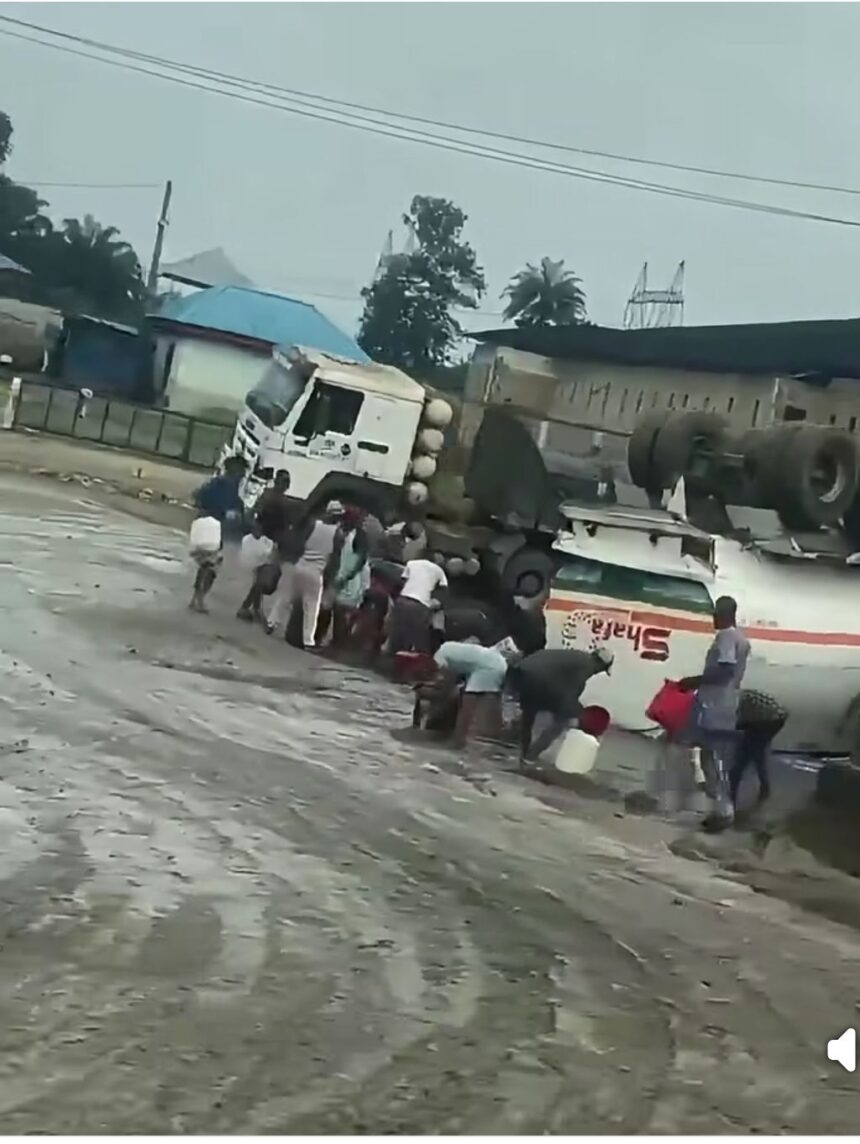
Residents of Warri, Delta State, have been seen scooping fuel from a broken-down tanker, raising fresh concerns over public safety and the repeated disregard for warnings about the dangers of handling fuel at accident scenes.
The incident has renewed questions about whether lessons have been learnt from previous fuel-related disasters, particularly the horrific incident at Oluku, Edo State where fuel scooping from a fallen tanker reportedly resulted in loss of lives and destruction of property.
Despite repeated public warnings about the dangers associated with scooping petrol from fallen or damaged tankers, some residents continue to engage in the risky practice, often exposing themselves and others to potentially fatal consequences.
Petrol is highly flammable, and a leak from a damaged tanker can create a dangerous environment in which a single spark from a cigarette, mobile equipment, a vehicle engine or other ignition source could trigger a fire or explosion.
Beyond the immediate risk to those scooping fuel, such incidents also threaten nearby residents, motorists, traders and emergency responders. A single explosion could turn an otherwise manageable tanker breakdown into a major disaster, resulting in deaths, severe burns and extensive damage to property.
The development in Warri has therefore reignited calls for stronger public awareness, stricter enforcement of safety regulations and a more effective emergency response whenever a fuel tanker breaks down or overturns.
What Can the Government Do to Prevent Another Tragedy?
To prevent a recurrence of such incidents, the Delta State Government, security agencies, the Federal Road Safety Corps (FRSC), fire services and other relevant emergency agencies must intensify efforts to protect lives and property.
First, authorities should ensure that roads around damaged or fallen fuel tankers are immediately cordoned off, with residents and motorists kept at a safe distance until the situation is declared safe by emergency personnel.
Second, public education campaigns should be sustained across communities, markets, motor parks and major highways to explain the potentially deadly consequences of scooping fuel from accident scenes. Such campaigns should go beyond warnings and use practical demonstrations and lessons from previous tragedies to drive home the message.
Third, security agencies should enforce existing laws against obstructing emergency operations and endangering public safety, while tanker operators must be held accountable for relevant safety violations.
Government should also strengthen emergency response systems by ensuring that fire services and other first responders can reach accident scenes quickly, secure affected areas and manage fuel spillages before members of the public gather.
Will Residents Ever Learn from the Past?
The sight of residents allegedly scooping fuel from a broken-down tanker in Warri raises a troubling question: must another tragedy occur before people recognise that the few litres of fuel they hope to obtain are not worth the risk of losing their lives?
While poverty and economic hardship may influence some people’s decisions, no amount of financial desperation can make the risk of a fuel explosion worthwhile.
Preventing another disaster requires more than public warnings. It demands responsible behaviour from residents, strict enforcement by authorities, improved emergency preparedness and accountability from all parties involved.
The lessons of previous fuel tanker disasters must not be forgotten. Every breakdown or accident involving a fuel tanker should be treated as a potential emergency, not an opportunity to obtain free fuel.
The urgent priority must be to protect lives before another preventable tragedy turns a moment of desperation into a national nightmare.