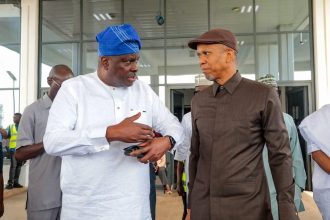
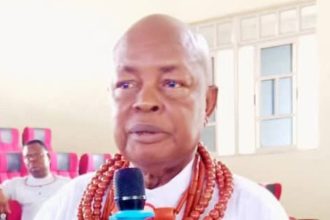
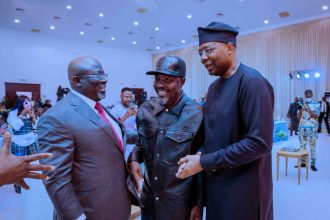
As political activities begin to heat up once again in Delta State, a renewed debate has emerged among residents over the legacies of the state’s three Peoples Democratic Party (PDP) governors between 1999 and 2023—Chief James Onanefe Ibori (Delta Central), Dr. Emmanuel Uduaghan (Delta South) and Dr. Ifeanyi Okowa (Delta North).
The debate was reignited after Henry Enweliku, in a post on his Facebook page, asked Deltans to reflect on which of the three former governors touched their lives most positively. The question triggered a flood of reactions across social media, with respondents offering sharply divided opinions, backed by personal experiences and perceived empirical evidence.
Strong Support for Ibori
A large number of respondents argued that Chief James Ibori remains the best governor Delta State has produced. Supporters credited his administration with mass employment, extensive road construction across all local government areas, and major investments in education, rural electrification, water supply and infrastructure.

Many noted that salaries and minimum wage were improved under Ibori, while free education policies benefited both the literate and illiterate. Some described his tenure as a period of “economic relief” and widespread optimism.
Others pointed to Ibori’s role in the resource control struggle, arguing that the 13 per cent derivation currently enjoyed by oil-producing states was largely championed during his era. Several commentators also highlighted his approach to the Niger Delta crisis, claiming he shielded the region during the peak of militancy.
“Ibori is the tree; others are branches,” one commenter wrote, insisting that no community in Delta State lacked evidence of his administration’s impact.
Uduaghan’s Grassroots Appeal
Supporters of Dr. Emmanuel Uduaghan countered that his administration had a more direct impact on the common man. They cited his grassroots policies, especially in healthcare, transportation, education and security.

Many recalled the free bus scheme, free drugs for children, free healthcare for mothers, and investments such as flyovers, road expansions and the opening up of rural communities. For this group, Uduaghan’s policies were people-centred and touched “every nook and cranny” of the state.
“From health to transportation and education, Uduaghan’s impact was felt more by ordinary Deltans,” one supporter argued, while another insisted that no Deltan could claim not to have benefited from his administration.
Mixed Views on Okowa
Opinions on Dr. Ifeanyi Okowa were more mixed. Some credited him for political grooming and empowerment, while others accused his administration of prioritising political allies, particularly in the build-up to the 2023 vice-presidential election.
A few commenters ranked him above Uduaghan but below Ibori, while others dismissed his tenure entirely, blaming the period for continued economic decline and the exit of companies from the state.

A Divided Verdict
Some contributors took a more balanced position, acknowledging that each governor performed differently based on their priorities. While Ibori was praised for laying the foundation for infrastructure and wealth creation, Uduaghan was credited with implementing social programmes that directly affected everyday life. Okowa, they argued, focused more on political consolidation.
However, a dissenting minority rejected all three administrations, insisting that Delta State failed to maximise its potential despite years of PDP rule.
Politics and Memory
The debate underscores how political memory, regional identity and personal experience continue to shape public opinion in Delta State. As the state edges closer to another political cycle, it’s also ones political opinion that “it’s only when an Urhobo man is in the helm of affairs that the state moves forward and that His Excellency, Hon. Sheriff Oborovweri is doing just that”. These competing narratives may influence voter sentiment and leadership choices going forward.
For now, one thing is clear: the legacies of Ibori, Uduaghan and Okowa remain deeply contested—and emotionally charged—among Deltans.