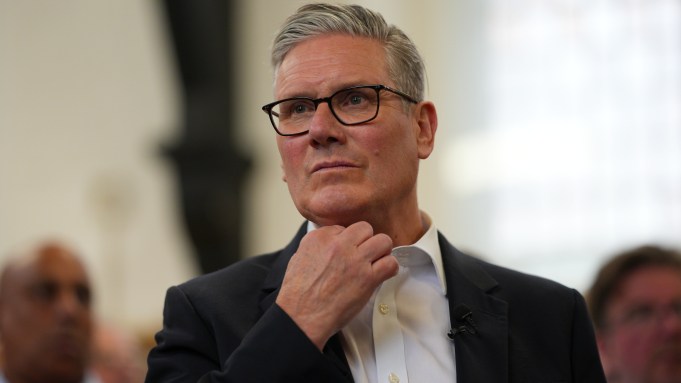
LONDON, Reactions continue to pour in across social media and political circles following British Prime Minister Keir Starmer’s announcement that he will resign as Prime Minister and step down as leader of the Labour Party.
The development has sparked intense debate, with opinions ranging from celebration and criticism to disappointment and concern over Britain’s political future.
Some commentators highlighted the UK’s recent political instability, with one observer remarking that Britain could soon be welcoming its sixth prime minister in seven years. Others suggested the office itself has become increasingly difficult to hold, describing the role as a “hot seat” that places immense pressure on whoever occupies it.
Supporters of Starmer expressed regret over his departure, praising his leadership and arguing that history may judge his tenure more favorably. One commenter described him as a “monumental leader” whose exit would eventually be regretted by many Britons.
Critics, however, welcomed the announcement, viewing it as an opportunity for political change. Some called for a broader transformation beyond a change of leadership, with demands for a new government mandate and even a general election.
The resignation also triggered wider political discussions, with some users drawing comparisons to international political developments and debating the direction of conservative and progressive movements around the world.
Others focused on the challenges facing Britain, including immigration, economic pressures and political polarization, arguing that the country’s next leader will inherit a difficult set of issues requiring urgent attention.
As the Labour Party prepares to begin the process of selecting a new leader, political analysts expect public debate to intensify over who should replace Starmer and what direction the country should take next.
With a leadership transition expected to be completed by the end of September, all eyes are now on the contenders seeking to become Britain’s next Prime Minister.