By Our Correspondent
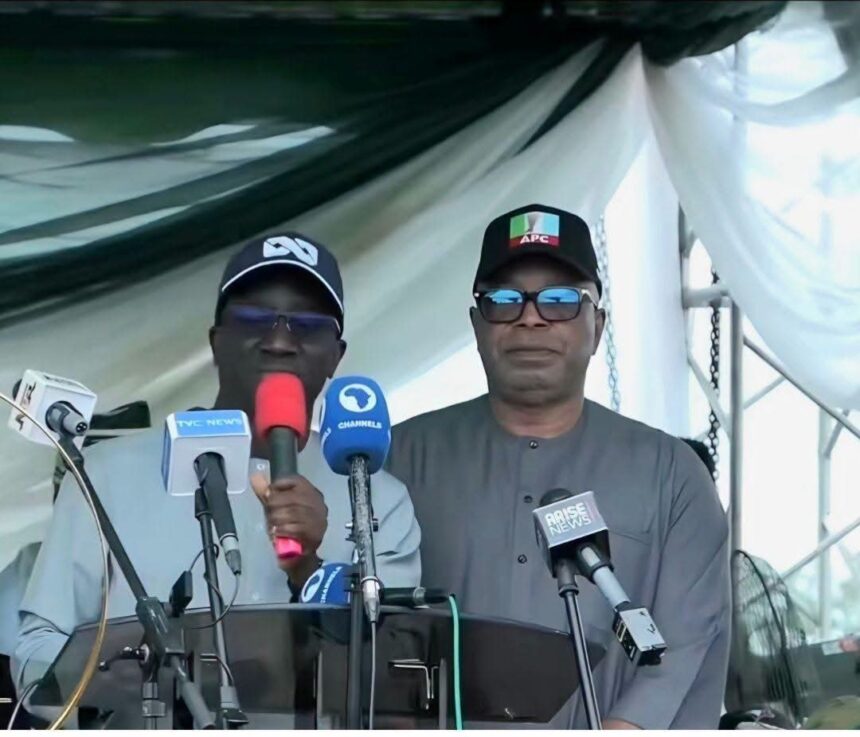
Reactions have continued to trail alleged comments and political remarks attributed to Edo State Governor, Senator Monday Okpebholo, and some of his political associates during the just-concluded Osun State governorship election.
The controversy has, however, sparked a broader debate about the conduct of political leaders during elections and the need for politicians to allow voters in a particular state to freely determine their preferred leaders without undue external influence.
During the election period, videos circulated on social media showing individuals identified as political supporters of the Edo governor making comments about their arrival in Osun and expressing confidence that the incumbent governor would be defeated.
Some of the remarks, delivered in a mixture of English and Pidgin, were interpreted by critics as disrespectful and overly confrontational towards the Osun State governor and his supporters.
Among the phrases attributed to the governor and his associates were expressions such as “Governor wey dey enter gutter,” “Akpako governor,” and “the bulldozer of Edo.”
The remarks have since generated reactions from political observers and social media users, particularly following the announcement of the election results.
The election result, which reportedly produced the Accord Party as the winner, has prompted renewed calls for political actors to exercise restraint and respect the wishes of voters.
Critics argue that elections should not be treated as contests in which political leaders from outside a state seek to impose their preferred candidates or parties on the electorate.
According to this school of thought, political parties and their supporters are free to campaign and mobilise voters, but the ultimate decision must remain with the people who will live with the consequences of their electoral choices.
One of the reactions making the rounds following the election stated: “This is a reminder to others: allow the local people to decide their fate.”
The development has also fuelled discussions about the growing trend of political figures travelling to other states to campaign for candidates, with some observers warning that such involvement should be conducted with respect for local voters and political institutions.
Political analysts note that healthy electoral competition is an essential part of democracy, but political disagreements should not degenerate into personal attacks, mockery or attempts to portray one candidate or party as inherently superior to others.
They argue that the electorate should be presented with competing policies, programmes and records, allowing voters to independently assess the candidates and make their choice.
The Osun experience, according to observers, therefore offers an important lesson for political actors ahead of future elections: campaign vigorously, present your records and persuade voters, but allow the people to have the final say.
As Nigeria continues to prepare for more electoral contests, stakeholders have called for political leaders to promote issue-based campaigns, tolerance and respect for the democratic process, regardless of the party or candidate they support.
Ultimately, elections are about the people and no political leader, party or outsider should be placed above the voters whose votes determine the outcome.