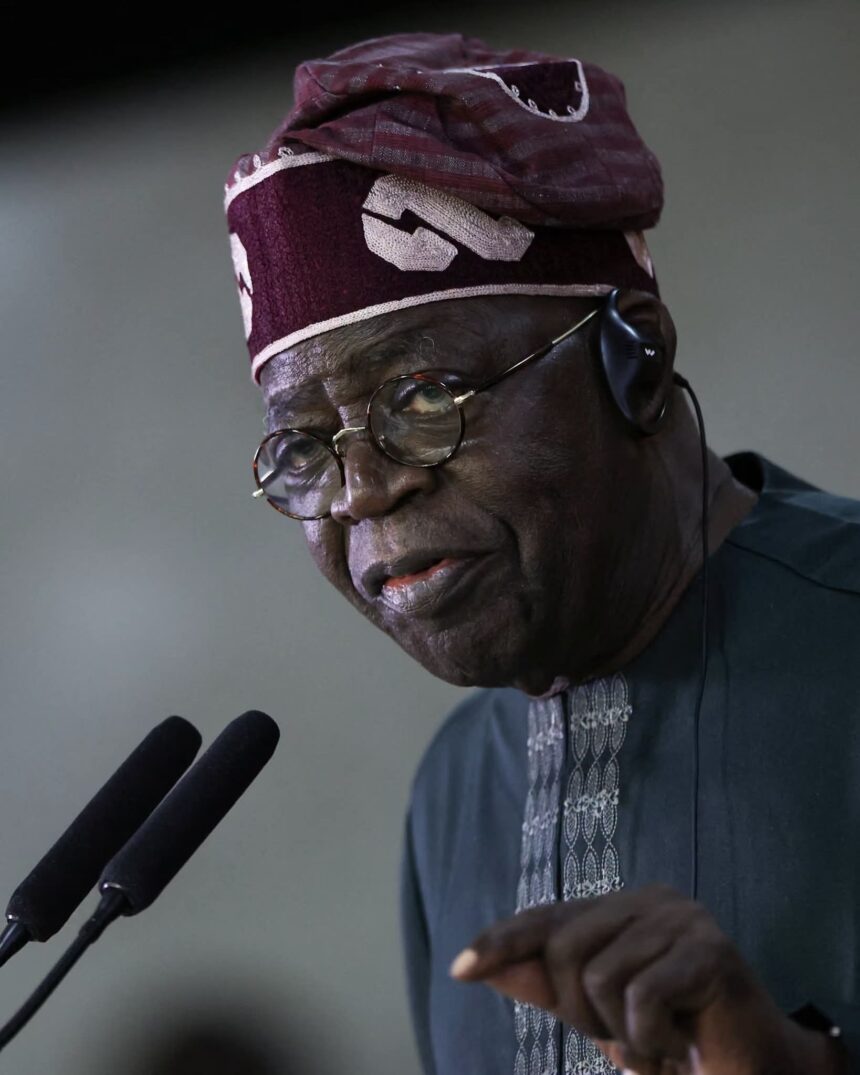
President Bola Ahmed Tinubu has declared that Nigeria has entered a new phase of economic growth and prosperity, saying the country has “corrected its course” after years of difficult economic challenges.
Tinubu made the declaration in his Independence Day address to Nigerians on Thursday, marking the 66th anniversary of the country’s independence.
The President acknowledged the hardship Nigerians have faced over the years, including economic crises, insecurity, inadequate infrastructure and political instability, but said the country had continued to survive because of the resilience and determination of its people.
According to him, his administration inherited an economy burdened by deep structural problems and was compelled to introduce difficult reforms to address what he described as long-standing economic distortions.
Tinubu likened the country’s economic situation to a patient diagnosed with cancer, arguing that previous administrations had relied on measures that merely eased the symptoms rather than addressing the underlying problems.
«“For too long, Nigeria’s leaders chose morphine while praying for a miracle that never came,” the President said.»
He defended the reforms introduced by his administration, including the removal of fuel subsidy and changes in the foreign exchange system, saying the measures were necessary despite the hardship they initially caused.
Tinubu said the reforms had begun to produce positive results, claiming that Nigeria’s economy had grown by more than four per cent in 2026, while both the oil and non-oil sectors contributed to the growth.
He also claimed that oil theft had declined, inflation had fallen from its peak, foreign reserves had been rebuilt and the foreign exchange market had stabilised.
The President further said Nigeria recorded more than $6 billion in non-oil export revenue in 2025, which he described as the highest in the country’s history.
“These are not idle claims. International observers, journalists, NGOs and multilateral institutions can see the change,” Tinubu said, adding that foreign direct investment was also rising.
‘Our priority is to reduce cost of living’
Tinubu said the focus of his administration would now shift from economic stabilisation to what he described as “shared and widespread prosperity.”
He said the government’s immediate priority was to reduce the cost of living by lowering the cost of producing and transporting goods.
According to him, the government would expand mechanised irrigation and dry-season farming, improve access to seeds and fertiliser, increase agricultural mechanisation and invest in storage and transportation.
He added that ongoing investments in roads, railways and ports were aimed at connecting farms and factories to markets and reducing the cost of moving goods.
Tinubu also pledged greater support for industries, businesses and young Nigerians, saying the government would use Nigeria’s gas resources to power new industries, revive factories, expand digital connectivity and provide skills and financing needed by businesses.
“I want to see more Nigerians making things. I want to see more Nigerian farms feeding our cities and supplying our factories. I want to see Nigerian businesses selling Nigerian goods to the whole world,” he said.
Tinubu promises more support for vulnerable Nigerians
The President acknowledged that millions of Nigerians were still struggling to afford food, education, healthcare and transportation.
He said the hardship experienced by many citizens could not be attributed solely to the reforms of the past three years, arguing that poverty and economic vulnerability were the result of problems that had accumulated over several decades.
Tinubu said his administration was strengthening social intervention programmes and improving the National Social Register to ensure that support reached vulnerable households.
He also highlighted the Nigerian Education Loan Fund and the Consumer Credit Corporation, saying the programmes were designed to expand access to higher education and consumer financing.
According to him, the government would also continue working with state and local governments to strengthen primary healthcare, basic education and other essential public services.
Tinubu said the government’s objective was not simply to manage poverty but to eliminate its underlying causes through sustained economic growth and the creation of productive jobs.
«“Our objective is not to manage poverty more efficiently. We will defeat it,” he declared.»
‘Now begins the age of prosperity’
The President said Nigeria could not erase in four years the economic difficulties that had accumulated over generations but maintained that his administration could change the country’s trajectory.
He described the current period as a turning point and said Nigerians should look forward to what he called “the age of prosperity.”
“Now begins the age of prosperity. An age in which the promise of this great nation must finally become the lived experience of Nigerians from all walks of life,” Tinubu said.
He urged Nigerians to remain hopeful and united, saying the country had passed through difficult years and was now positioned to build a more prosperous future.
“Let us go forward together, with faith in ourselves, faith in our country, and faith that the sacrifices we have made will yield their reward,” he said.
Tinubu concluded by describing Nigeria’s future as a “Promised Land” of abundance and opportunity, where prosperity would be broadly shared and children could aspire beyond the circumstances of their birth.
“Let us go forward. No looking back,” the President said.
He wished Nigerians a happy Independence Day and prayed for the continued progress of the Federal Republic of Nigeria.