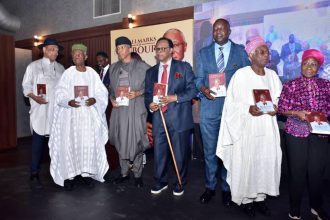
By Shedrach Onitsha
Nigeria’s immense potential has long been acknowledged, yet its translation into measurable productivity remains inconsistent. This was the central theme of a compelling lecture delivered by Senator Ede Dafinone at the 18th Convocation Ceremony of Delta State University, Abraka, where he challenged graduates and stakeholders to rethink the country’s development trajectory.
Addressing the Class of 2026, Dafinone explored what he termed the “Nigerian Paradox”—a nation richly endowed with natural and human resources, yet grappling with widespread poverty and systemic inefficiencies. He argued that potential alone is insufficient; true progress depends on productivity, which emerges only when systems effectively channel effort into results.
He emphasized that sustainable development is not achieved through isolated projects or symbolic milestones, but through consistent, disciplined actions supported by strong institutions. Drawing lessons from countries like South Korea, Singapore, and Botswana, Dafinone highlighted the importance of building systems that nurture and protect human capital—the most valuable driver of national prosperity.
A key takeaway from the lecture was the supremacy of systems over individual brilliance. According to Dafinone, even the most talented individuals cannot thrive in dysfunctional environments, while average performers can excel within well-structured systems. This perspective shifts the focus from searching for exceptional leaders to building institutions that enable ordinary citizens to achieve extraordinary outcomes.
The Senator also addressed Nigeria’s governance challenges, noting that while the country has a solid framework of laws, weak implementation undermines their effectiveness. He called for a precise understanding of governance gaps, including poor budget execution and regulatory capture, stressing that these issues can be resolved through collective commitment and accountability.
Turning to the global economy, Dafinone pointed out the shift from physical resources to knowledge-based assets such as technology, data, and creativity. He described this transition as a unique opportunity for Nigeria to leapfrog traditional development stages, particularly as digital tools reduce geographic barriers. Nigerian entrepreneurs and creatives, he noted, are already demonstrating this potential on the global stage.
On artificial intelligence, he described it as a powerful tool that enhances human capability but cannot substitute for sound institutions or critical thinking. Its effectiveness, he argued, depends on the user’s clarity of thought and discipline.
Addressing the ongoing migration of skilled Nigerians, commonly referred to as “japa,” Dafinone acknowledged the challenges driving this trend but warned of its long-term consequences. He urged talented Nigerians, both at home and abroad, to maintain a commitment to national development, emphasizing that meaningful change requires the active participation of the country’s most capable citizens.
He identified three major obstacles to effective policy implementation in Nigeria: lack of continuity between administrations, weak mid-level institutions, and a tendency to prioritize ambitious ideas over consistent execution. To counter this, he encouraged graduates to adopt an “execution culture”—a commitment to delivering on promises with precision and timeliness.
On a personal level, Dafinone stressed the importance of discipline and focus in an age of constant distraction. He warned that the erosion of attention poses a greater threat to success than external economic challenges, urging graduates to cultivate the ability to engage in deep, meaningful work.
He also highlighted a shift in the global job market, where competence increasingly outweighs credentials. While formal education remains important, he encouraged graduates to continuously build practical skills and demonstrate their abilities through tangible work.
In closing, Dafinone reminded the graduates that they are stepping into a challenging environment, but one that offers the opportunity to shape the future. He urged them to embrace curiosity, resilience, and long-term thinking, emphasizing that Nigeria’s transformation depends on deliberate, sustained action.
The message was clear: the nation’s potential is undeniable, but its productivity—and ultimately its prosperity—will be determined by the choices and commitments of its people.
Shedrach Onitsha, FCIMS,MNIPR
A Media and Public Relations Consultant writes from Ughelli.