The University of Cambridge is set to return about 100 Benin Bronzes to Nigeria in the coming months, ending a prolonged delay caused by disagreements over ownership and custodianship between the Nigerian state and the Oba of Benin.
According to The Observer, the restitution will be carried out by the Museum of Archaeology and Anthropology (MAA), Cambridge University, following its 2022 endorsement of a claim by Nigeria’s National Commission for Museums and Monuments (NCMM) for the return of 116 artefacts looted by British forces during the 1897 sacking of Benin City. The term “Benin Bronzes” refers to ceremonial objects made of bronze, brass, and ivory.
Although the claim was approved, the return process stalled in March 2023 after Nigeria’s former president, Muhammadu Buhari, transferred ownership of repatriated Benin Bronzes to Oba Ewuare II, the current monarch of Benin and head of the royal family from whom the artefacts were originally taken. This followed Germany’s 2022 decision to transfer ownership of about 1,100 Benin works to Nigeria.
Nicholas Thomas, Director of the Museum of Archaeology and Anthropology at Cambridge, explained that the university paused the process to allow for clarity. “We paused as a clearer framework was needed. In July last year, the university council confirmed the transfer should proceed. The bronzes should go back within months,” Thomas said, noting that the remaining 16 objects will stay in Cambridge on loan.
In early 2025, the Director-General of the NCMM, Olugbile Holloway, signed a five-year agreement with Oba Ewuare II, authorising the commission to manage the returned artefacts on the monarch’s behalf. However, plans to establish a proposed “royal museum” in Benin City to house the bronzes appear to have stalled.
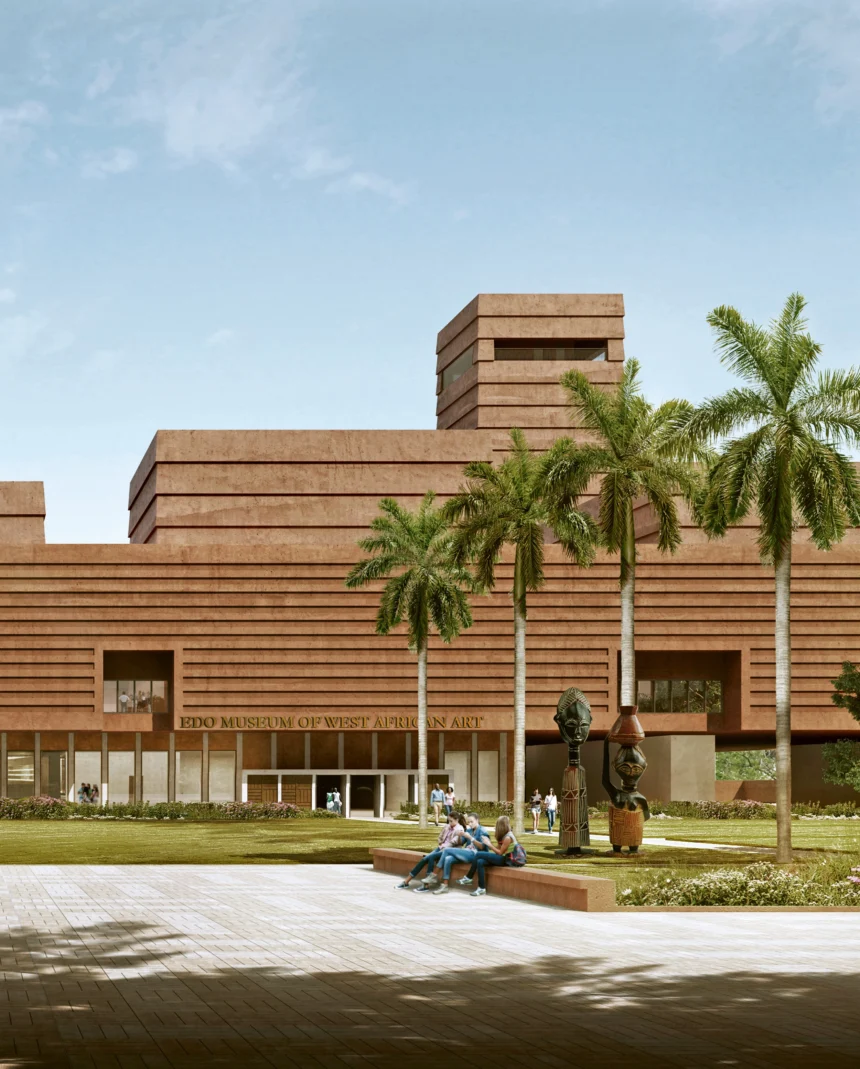
Meanwhile, the Museum of West African Art (MOWAA), which was scheduled to open in Benin City last November and expected to display some Benin Bronzes, has remained closed after protesters forced their way into its premises. Reports suggested the protest was linked to disagreements involving the Oba of Benin over restitution processes, funding, and custody of the artefacts.
Addressing the controversy, Phillip Ihenacho, Director and Executive Chair of MOWAA, told The Art Newspaper at the museum’s opening event: “From 2021 onwards, we have tried to make it clear that we are not a receptacle for the Benin Bronzes.” The reopening date of the museum remains uncertain.
In the interim, the NCMM has constructed a new secure storage and exhibition facility in Benin City, known as the Oba Ovonramwen facility, which will house some of the returned artefacts. The commission is also rebuilding the National Museum in Lagos, originally constructed in the 1950s, with private funding. According to Barnaby Phillips, author of The African Kingdom of Gold: Britain and the Asante Treasure, the Lagos museum is expected to serve as the primary venue for displaying returned Benin Bronzes.
Thomas confirmed that Cambridge’s engagement has been exclusively with the NCMM. “In general, European museums can only return artefacts to government agencies. Those agencies might then determine that the artefacts should be cared for or managed by an indigenous community, or in a museum managed for a traditional authority such as the Royal Court of Benin,” he said.
The decision by Cambridge University further intensifies pressure on the British Museum, which holds approximately 900 Benin artefacts but is legally barred from permanently returning them under the British Museum Act of 1963.
Credit: The Art Newspaper