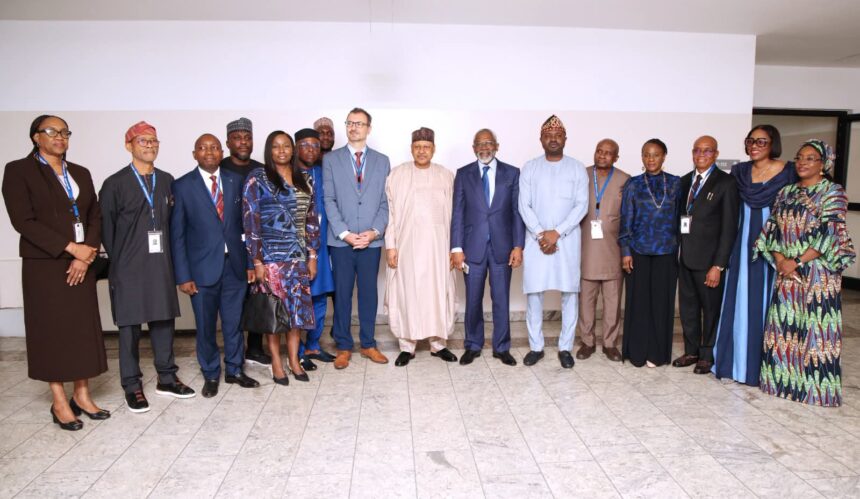
ABUJA, Nigeria — The Federal Government has inaugurated a Presidential Task Force on Ebola Virus Disease (EVD) Preparedness as part of efforts to sustain Nigeria’s zero-case status and strengthen the country’s capacity to prevent and respond to potential outbreaks.
Speaking at the inauguration of the Task Force at the State House in Abuja on Thursday, the Chief of Staff to the President and Chairman of the Presidential Task Force on Ebola Preparedness, Femi Gbajabiamila, said Nigeria currently has no reported case of Ebola and is intensifying preventive measures to ensure the situation remains unchanged.
Gbajabiamila said the government’s approach is focused on prevention rather than cure, stressing that lessons from the 2014 Ebola outbreak have guided the development of stronger surveillance and response systems.
“We have covered a lot of ground, and there are presently no reported cases in the country, which is good news,” he said.
“That is why all hands must be on deck to ensure that preventive measures are prioritised rather than curative measures. We do not want a repeat of what happened during the last outbreak when a carrier entered the country and everyone was scrambling to respond.”
According to him, the Task Force has established structures and sub-committees to address critical areas of preparedness and response, with the goal of positioning Nigeria as a leader in epidemic management across Africa.
“We have set up sub-committees to address key areas of concern, and hopefully Nigeria will take the lead among African nations. We will not follow; we will lead,” he added.
The Chief of Staff expressed confidence in Nigeria’s ability to spearhead continental efforts against Ebola and other emerging public health threats. He noted that the Federal Government is working closely with states that host international airports, including Lagos, Kano, Rivers and Enugu, as well as the Federal Capital Territory, to strengthen monitoring and rapid response systems.
Gbajabiamila also highlighted the importance of securing Nigeria’s land borders due to the high volume of cross-border movements. He said agencies such as the Border Management Agency, the Nigeria Immigration Service and border communities are actively involved in preparedness efforts.
“There is significant emphasis on land borders because of the high volume of cross-border movements. We have learnt valuable lessons from the 2014 outbreak and are building on those gains by putting structures in place to eliminate any gaps in our preparedness,” he said.
He explained that the government is seeking to establish permanent structures that will ensure a swift and coordinated response to future outbreaks.
“We want to put in place permanent arrangements and structures so that in two or three years, if another outbreak occurs, we will not be running from pillar to post trying to establish response mechanisms,” he said.
Gbajabiamila disclosed that the Task Force comprises committees on border management, immigration control and disease surveillance, while the Nigeria Centre for Disease Control and Prevention (NCDC) will provide overall technical leadership and coordination.
Among those present at the inauguration were the Minister of Information and National Orientation, Mohammed Idris; Minister of Interior, Olubunmi Tunji-Ojo; Director-General of the NCDC, Dr Jide Idris; Managing Director and Chief Executive Officer of the Federal Airports Authority of Nigeria (FAAN), Olubunmi Kuku; and the World Health Organisation (WHO) Representative and Head of Mission in Nigeria, Dr Pavel Ursu.
Also in attendance were health officials from Lagos, Rivers, Enugu and the Federal Capital Territory, alongside representatives of the Federal Ministry of Health, the Ministry of Foreign Affairs, the DRASA Health Trust and public health experts.
The inauguration comes amid growing concerns over Ebola outbreaks in parts of Africa and underscores the Federal Government’s commitment to safeguarding public health through proactive preparedness measures.