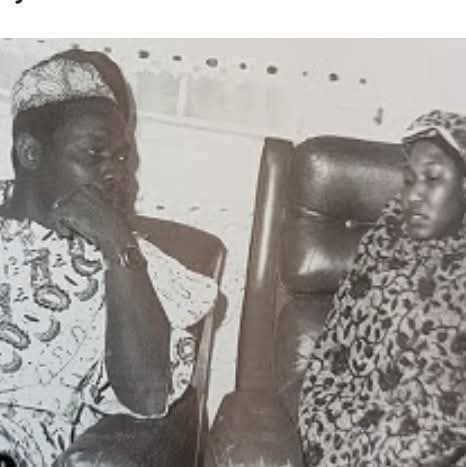
This poignant photograph captures Nigeria’s Chief of Staff, Supreme Headquarters, Olusegun Obasanjo, consoling the young and newly widowed First Lady, Hafsat Ajoke Muhammed, just hours after the assassination of her husband on February 13, 1976.
Hafsat Muhammed was only 35 years old at the time, suddenly thrust into widowhood and left to raise six children alone. Her husband, General Murtala Ramat Muhammed, had been just 37 when his life was violently cut short during an attempted coup in Lagos. The image reflects not only personal grief but a nation in shock, grappling with the loss of a leader at the height of reform.
Born on November 8, 1938, in Kano State, Murtala Muhammed was commissioned into the Nigerian Army in 1961. He distinguished himself during the Nigerian Civil War and later emerged as a central figure in the July 1975 coup that removed General Yakubu Gowon. Shortly afterwards, he became Nigeria’s fourth Head of State.
Although his leadership lasted barely six months, Murtala Muhammed’s impact was profound. His administration created new states, initiated the process that led to the establishment of the Federal Capital Territory in Abuja, and pursued decisive economic and administrative reforms aimed at reshaping Nigeria’s future.
Decades later, Murtala Muhammed remains etched in Nigeria’s collective memory as a symbol of bold leadership, national purpose, and patriotic sacrifice, while this image endures as a quiet testament to the human cost behind historic moments.