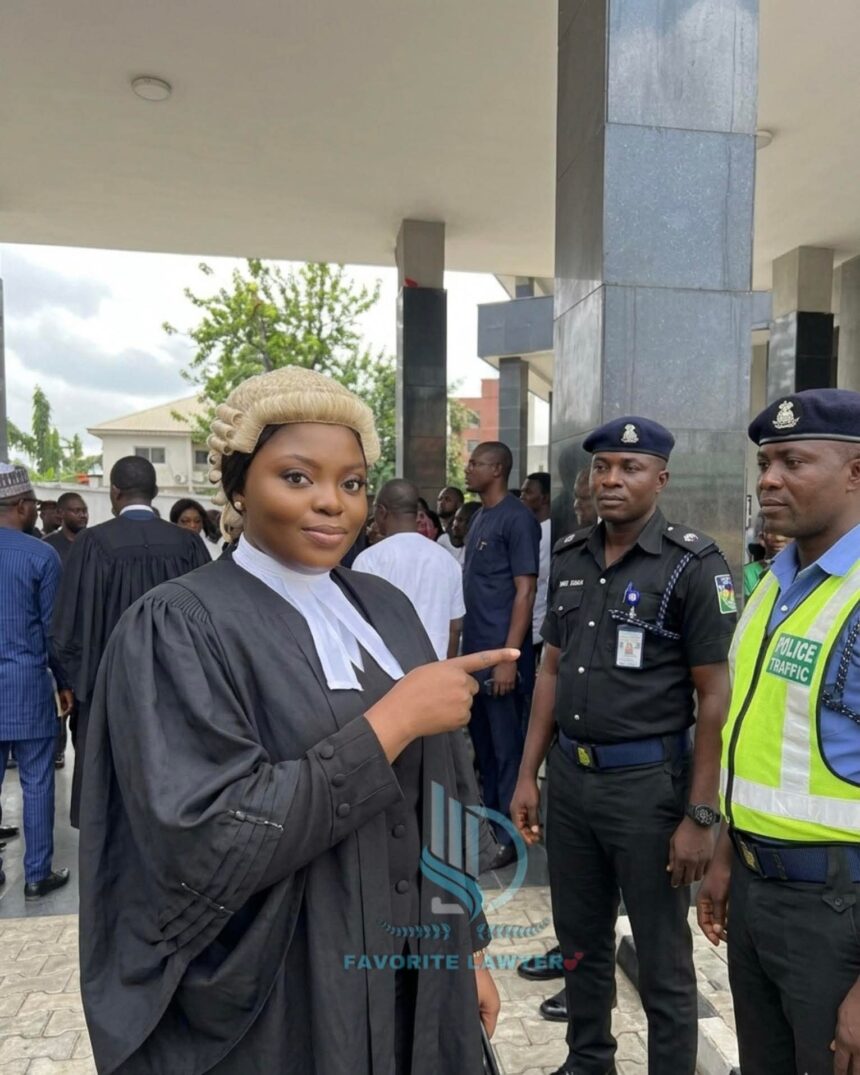
A legal practitioner, Confidence Aribibia, has cautioned Nigerians against the growing tendency to involve the police in disputes that are essentially civil in nature, warning that such actions could expose complainants to legal consequences.
Aribibia, in a legal awareness message, noted that many people wrongly assume that the police are the appropriate solution to every disagreement, including landlord-tenant disputes, debt recovery matters, business disagreements and family conflicts.
According to her, while the police have the responsibility of investigating criminal offences, they are not primarily established to resolve ordinary civil disputes that should be handled through negotiation, mediation or the courts.
She listed landlord and tenant disagreements, recovery of debts, breach of contract claims, employer-employee disputes, partnership disagreements, boundary conflicts, inheritance matters, child custody issues and failure to fulfil business agreements among matters that are generally civil in nature.
The legal practitioner, however, clarified that criminal conduct arising from such relationships may still warrant police intervention.
She explained that offences such as fraud, stealing, assault, forgery and obtaining by false pretence remain criminal matters that can be investigated by law enforcement agencies, regardless of the relationship between the parties involved.
Aribibia stressed that where the dispute revolves around demands such as repayment of money, compliance with contractual obligations, possession of property or sharing of entitlements, the appropriate remedy may lie in civil litigation rather than police action.
She further warned that individuals who maliciously use law enforcement agencies to harass, intimidate or oppress others in civil disputes could face legal challenges, including lawsuits.
“The fact that you are angry does not automatically turn a civil dispute into a criminal offence,” he said.
The lawyer advised members of the public to seek legal guidance before filing complaints with the police, urging them to first determine whether the issue in question constitutes a criminal offence or a matter that should be resolved by the civil courts.
According to her, obtaining proper legal advice at an early stage can help prevent costly mistakes and prolonged legal battles.