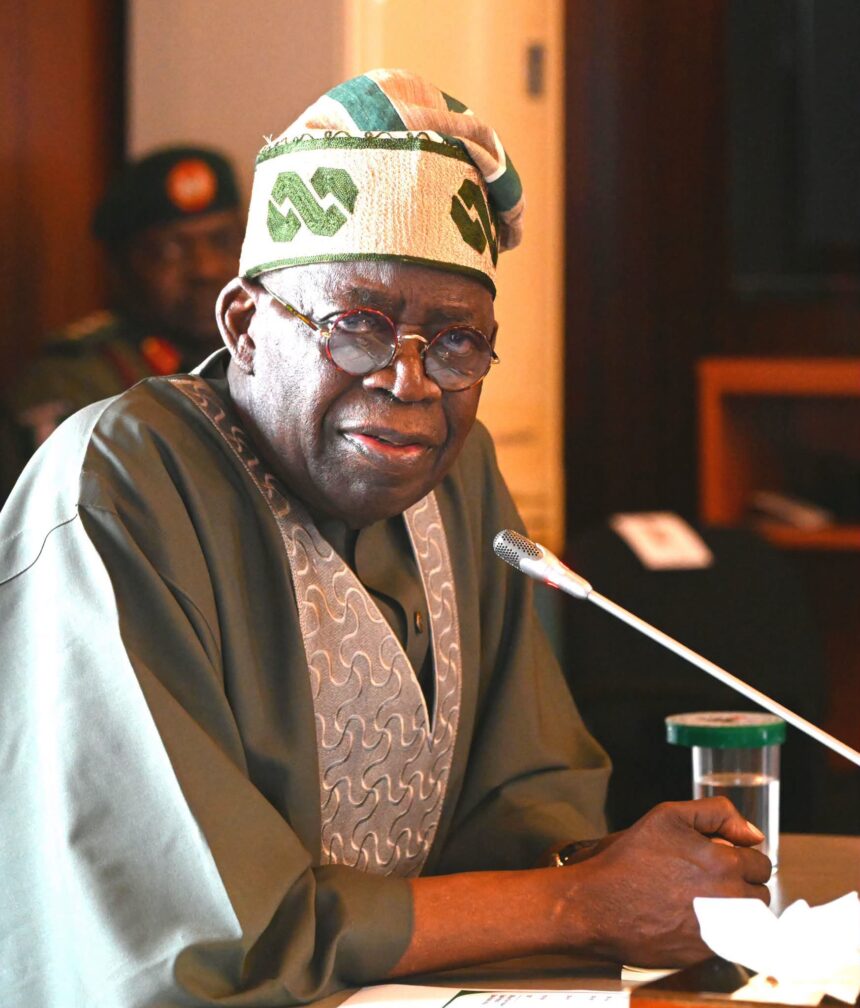
President Bola Tinubu’s administration is set to implement a Five-Year Strategic Defence Operations Plan aimed at tackling terrorism, banditry, kidnapping and other security challenges confronting Nigeria.
The plan, according to a statement issued on Sunday, November 15, 2026, by Dele Alake, spokesperson for the All Progressives Congress (APC) Presidential Campaign Council, is designed to strengthen the country’s security architecture, improve military effectiveness and promote a coordinated response to emerging security threats.
Alake said the initiative would provide a long-term framework for aligning defence priorities, operational requirements, military capabilities and expenditure with Nigeria’s current and anticipated security challenges.
He described the plan as a major component of Tinubu’s efforts to reposition the nation’s security system towards a more coordinated, intelligence-driven, technology-enabled and preventive approach to tackling insecurity.
Providing an account of the administration’s security operations over the past three years, Alake claimed that Nigerian military operations had resulted in the elimination of more than 15,000 Boko Haram terrorists and bandits.
He also disclosed that more than 130,000 Boko Haram fighters and their dependants had surrendered through Operation Safe Corridor, the Federal Government’s rehabilitation programme for repentant insurgents.
According to him, the figures demonstrate the administration’s two-pronged strategy of sustained military operations and non-kinetic interventions in addressing insecurity.
Expansion of Military Formations, Recruitment
The APC spokesperson said Tinubu had created four new Army divisions and restructured existing military formations to expand operational coverage, decentralise military operations and improve the military’s response to security threats.
He added that the President had approved the establishment of two additional Army depots in Osogbo, Osun State, and Amasiri-Edda, Ebonyi State, to expand military training capacity and accelerate the recruitment of new soldiers.
According to the statement, the two facilities can accommodate 6,000 recruits each, bringing their combined training capacity to 12,000 soldiers at a time.
Alake disclosed that 5,210 recruits were already undergoing training at the Osogbo facility, adding that the expansion would reduce training turnaround time and increase the number of soldiers available for deployment.
He further stated that Tinubu had approved the recruitment of an additional 28,000 soldiers to strengthen military operations and improve security presence across the country.
In a related development, the President was said to have approved the recruitment of 50,000 additional police officers as part of efforts to reinforce internal security, improve policing capacity and strengthen the country’s response to criminal activities.
700-Unit Military Barracks Underway in Ekiti
On military welfare and infrastructure, Alake said the administration was also investing in accommodation and operational facilities to improve the living and working conditions of security personnel.
He cited the proposed 700-unit military barracks in Ikere-Ekiti, Ekiti State, as one of the projects designed to provide military personnel with improved accommodation and essential operational infrastructure.
According to him, the investments are intended to address manpower and infrastructure gaps while ensuring that security personnel are adequately trained, equipped and deployed to areas facing security challenges.
Intelligence, Surveillance and Coordination
Alake further explained that the Five-Year Strategic Defence Operations Plan would introduce a more strategic approach to national defence by ensuring that security investments are guided by clearly identified threats, operational requirements and national priorities.
He said the framework was expected to strengthen combat readiness, address critical capability gaps, optimise available resources and minimise unnecessary expenditure and wastage.
The APC Presidential Campaign Council spokesperson maintained that the measures reflected President Tinubu’s determination to strengthen the country’s security institutions and address the persistent threats of terrorism, banditry, kidnapping and other forms of criminality.