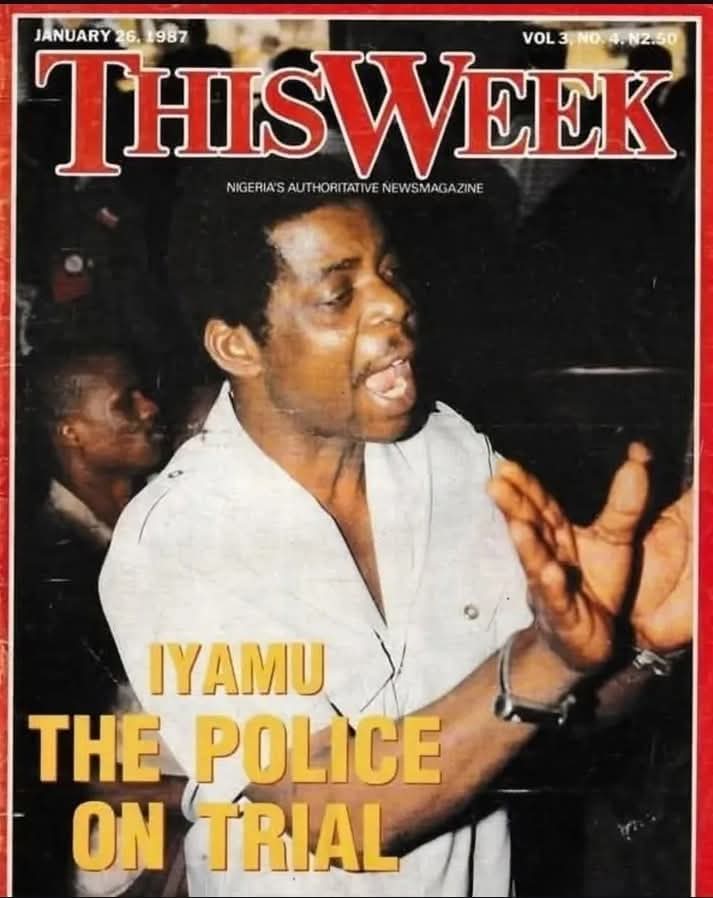
On 15 February 1987, George Iyamu, aka Gbagbati, a Deputy Superintendent of Police was executed by firing squad in Benin City following his conviction and sentencing to death on January 9 for “procuring the commission of armed robbery and murder.”
It was one of the most shocking moments in the then Bendel State’s history. Iyamu was not an ordinary officer. He was respected, influential, and known in police circles as a “sharpshooter.” Yet investigations revealed that he had secretly collaborated with Nigeria’s most feared armed robber at the time — Lawrence Anini, the notorious gang leader whose 1986 crime spree terrorized Benin and beyond.
Anini’s gang carried out bank robberies, highway ambushes, and targeted killings. When Anini was arrested on December 3, 1986, his confessions led investigators straight to Iyamu.
The trial before the 3-man Bendel State Armed Robbery and Firearms Tribunal, headed by Justice James Omo-Agege, gripped the nation. Iyamu was convicted alongside members of the gang including Monday Osunbor, Solomon Osenwenkhai, Bernard Obi, and Friday Ukponwan (aka “Ofege”).
Evidence showed Iyamu supplied protection, arms, intelligence, and support to the gang. When a dispute between him and Anini’s group unraveled their alliance, the gang retaliated by targeting police officers, killing ten policemen. The dispute arose from Iyamu’s promise to the gang to secure the release of their friend and comrade in crime, Kingsley Eweka, a member of the Benin Royal family, who was on trial for armed robbery. In spite of Iyamu’s assurances to the gang, Kingsley was convicted, sentenced to death and executed. The start of the dare-devil attacks on police men coincided with the execution of the prince.
On February 15, 1987, Iyamu himswlf was executed by firing squad in Benin City. His fall from decorated officer to condemned man forced Nigeria to confront an uncomfortable truth: corruption within law enforcement could enable the very crimes it was meant to prevent.
Nearly four decades later, this chapter remains a sobering reminder in Benin’s modern history — a story of betrayal, justice, and the fragile line between power and responsibility.
Credit;BeninHistory