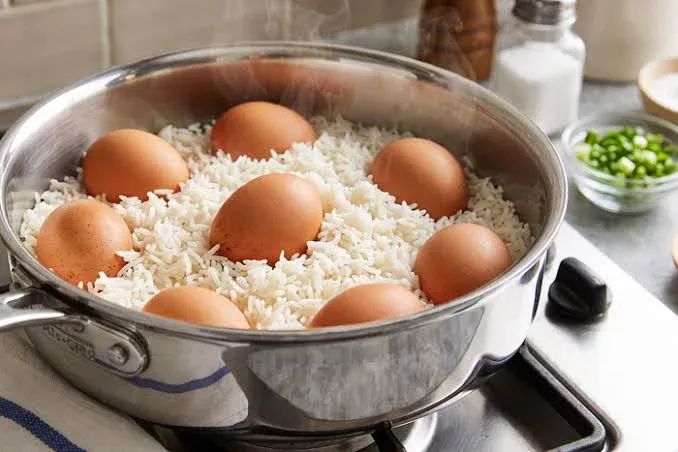
Registered Dietitian-Nutritionists have warned Nigerians against boiling unwashed and unpeeled eggs together with rice in the same pot, saying the practice could increase the risk of cross-contamination and foodborne infections.
The nutrition experts explained that harmful bacteria, including Salmonella and E. coli, could be present on eggshells and potentially contaminate rice when both foods are cooked together.
Speaking in exclusive interviews with PUNCH Healthwise, the experts noted that although adequate cooking can destroy bacteria, the gradual heating of water before it reaches boiling point may provide an opportunity for bacteria to survive and spread to other food in the pot.
They also warned that eggshells could crack during cooking, allowing egg contents to spill into the rice and potentially affect its appearance, taste and odour.
The warning comes amid a recent viral post on X in which users shared experiences of alleged food contamination after consuming meals prepared by boiling rice and eggs together.
Further observations online suggest that some Nigerians adopt the practice to save cooking time, water, utensils and cooking fuel.
However, the nutritionists stressed that convenience should not take precedence over food safety, noting that foodborne infections could lead to medical expenses, lost working hours and reduced productivity.
Providing expert insight, a nutrition and public health practitioner and Registered Dietitian-Nutritionist, James Oloyede, said boiling eggs together with rice could create an opportunity for bacteria on the eggshell to come into contact with the rice.
Oloyede, a former Director of Nutrition Services and Health Education at the Osun State Primary Health Care Development Board, said the risk of cross-contamination could persist even when the eggs had been washed.
“Cooking egg and rice together in the same pot has been found to be a risk factor in cross-contamination of certain bacteria, especially Salmonella, that can be found on the shell of the egg even after washing with the rice that is being cooked,” he said.
According to him, the risk is heightened because rice begins absorbing water as soon as it is placed in the cooking pot.
“The challenge with rice is that absorption begins to take place the moment you put your rice in the water. When the water begins to warm up, we see the rice grain begin to swell. What makes it swell is the absorption of the water.
“And if the egg contains Salmonella bacteria, the tendency is that when the rice is absorbing water, then the bacteria can also be absorbed together with the water and can remain throughout the process of the boiling,” he explained.
The nutritionist advised Nigerians to prioritise proper food hygiene and safe food preparation practices to minimise the risk of foodborne illness.
Credit: Punch Health Wise,