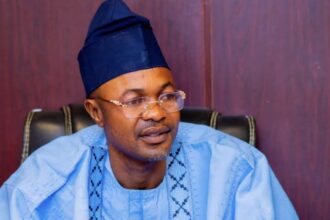
A Nigerian lawyer, Fun-ororo Narebor, has argued that Rivers State Governor, Siminalayi Fubara, cannot unilaterally extend his tenure beyond May 29, 2027, despite the six-month period he spent out of office during the 2025 State of Emergency in the state.
Narebor, in a legal opinion on the purported extension of the governor’s tenure, said Fubara’s four-year constitutional tenure would ordinarily expire on May 29, 2027, adding that any claim to an additional six months would require judicial validation.
The lawyer based his position on Sections 180 and 305 of the 1999 Constitution, as well as judicial precedents including Peter Obi v INEC, Ladoja v INEC and Marwa v Nyako.
According to him, Fubara was sworn into office on May 29, 2023, for a four-year term. However, on March 18, 2025, President Bola Ahmed Tinubu declared a State of Emergency in Rivers State, during which the governor, deputy governor and members of the state House of Assembly were suspended.
The emergency administration, headed by Vice Admiral Ibok-Ete Ibas (retd.), lasted six months, after which Fubara was reinstated on September 18, 2025.
Narebor noted that the Independent National Electoral Commission had fixed February 6, 2027, for the Rivers State governorship election, a date he said was consistent with the constitutional timetable.
He, however, acknowledged that there was an argument in favour of adding the six months to Fubara’s tenure on the basis that the suspension of an elected governor was unconstitutional.
“The argument for November 2027 is not without merit, but it is not automatic,” Narebor said, explaining that the position was predicated on the contention that the suspension was not authorised by Section 305 of the Constitution.
He cited the Supreme Court’s decisions on gubernatorial tenure, particularly cases concerning governors who were removed from office unlawfully, arguing that the apex court had treated the constitutionally guaranteed four-year tenure as protected.
Narebor said proponents of the November 2027 position, including lawyer Kenneth Okonkwo, contend that the period of the suspension should be restored because the suspension itself was unconstitutional.
However, he stressed that such a position would require a court pronouncement before it could have legal effect.
According to him, Fubara would need to approach the Federal High Court for declaratory reliefs challenging the constitutionality of his suspension and seeking an order that his tenure be calculated without the six-month period.
“Without such judicial pronouncement, any attempt to remain in office beyond May 29, 2027 will be unconstitutional and will create a constitutional crisis,” he stated.
Narebor concluded that, based on the law as he interprets it, Fubara’s tenure presently runs until May 29, 2027, while any extension to November 2027 would require judicial determination.
He added that the Supreme Court’s position on the sanctity of gubernatorial tenure could provide legal grounds for seeking such relief, but that the extension should not be treated as automatic without a court order.