By using this site, you agree to the Privacy Policy and Terms of Use.
Accept
  • About Us
  • Trending
  • Business
  • Politics
  • Football
  • Religious
  • Videos
The Roma News
  • Home
  • Politics
  • Business
    • Finance
  • Sports
  • World News
  • Security
  • Education
  • Contact
Reading: How Nigeria’s Six Geopolitical Zones Took Shape Under Abacha’s Military Rule
The Roma NewsThe Roma News
Font ResizerAa
  • About Us
  • Trending
  • Business
  • Politics
  • Football
  • Religious
  • Videos
Search
  • Home
  • Politics
  • Business
    • Finance
  • Sports
  • World News
  • Security
  • Education
  • Contact
Follow US
© theromanews.| Powered by BugX Solutions
The Roma News > Blog > Politics > How Nigeria’s Six Geopolitical Zones Took Shape Under Abacha’s Military Rule
Politics

How Nigeria’s Six Geopolitical Zones Took Shape Under Abacha’s Military Rule

theromanews
Last updated: February 16, 2026 4:07 pm
theromanews
3 Min Read
Share

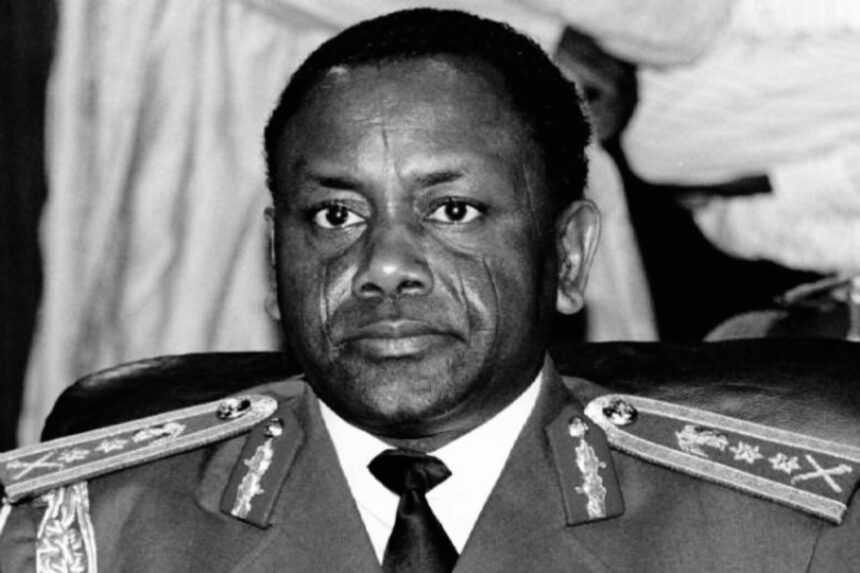
The articulation of Nigeria’s six geopolitical zones is widely traced to the administration of Sani Abacha, who governed the country from 1993 to 1998. Although Nigeria had long operated a federal system built around regions and later states, the consolidation of states into six broad geopolitical blocs gained prominence during his tenure and has since become a lasting feature of the country’s political structure.

Nigeria’s territorial evolution began at independence in 1960 with three main regions, later four. In 1967, amid the civil war, the military government of Yakubu Gowon created 12 states to weaken secessionist pressures and strengthen federal control. Subsequent administrations continued state creation exercises to address minority concerns and administrative demands.

By the time Abacha assumed power, Nigeria had 30 states. In 1996, his government announced the creation of six additional states—Bayelsa, Ebonyi, Ekiti, Gombe, Nasarawa, and Zamfara—bringing the total to 36, where it remains today. Analysts note that this expansion provided the structural foundation for grouping states into six geopolitical zones.

The six zones—North Central, North East, North West, South East, South South, and South West—were conceived as clusters of states with perceived historical, cultural, and administrative affinities. Though not formally recognized in the 1999 Constitution, the arrangement became widely adopted in political discourse, public administration, and national planning.

Over time, the zoning framework evolved into an informal mechanism for balancing representation in federal appointments, ministerial portfolios, security leadership, and party politics. During Nigeria’s Fourth Republic, which began in 1999, major political parties incorporated zoning principles into power-sharing arrangements, particularly in presidential nominations and party leadership positions.

Political historians and scholars have offered differing interpretations of the development. Some argue that the geopolitical structure reflected an attempt to manage Nigeria’s ethnic and regional diversity within a centralized military system. Others contend that it also served strategic political purposes during a period of authoritarian rule, helping to manage elite competition and broaden regime legitimacy.

Despite ongoing debate about its origins and motivations, the six-zone framework remains deeply embedded in Nigeria’s political vocabulary. It continues to shape discussions around equity, federal character, resource distribution, and national unity.

Today, nearly three decades after its consolidation under Abacha’s administration, the geopolitical zoning model remains a central reference point in debates about governance and representation in Africa’s most populous nation.


Credit: North Book, Nigerian Historical,

TAGGED:Nigerian governmentNigerian HistoricalNorth BookSani AbachaSix Geo Political Zones
Share This Article
Facebook Email Copy Link Print
Previous Article Update:U.S. Imposes Sanctions on Eight Nigerians Over Alleged Terror, Cybercrime Links
Next Article Sanwo-Olu Hands Over to One-Day Governor as Lagos Spelling Bee Champion Takes Charge at Lagos House
Leave a Comment Leave a Comment

Leave a Reply Cancel reply

Your email address will not be published. Required fields are marked *

Most Popular

Favour Weds Favour; Iam my beloved and my beloved is mine…F&F

By
theromanews

ICSAN Urges Members to Promote Health, Wellness and Professional Networking

By
theromanews

Pst Kumuyi Preaches Critical Importance of Reconciliation and Progress in Families and Society

By
theromanews
- Advertisement -

Join Now

Join our online community to get constant updates on all Breaking News and latest trends.
- Advertisement -

Edo State University to Host 18th Inaugural Lecture on Returning to Traditional Values

6 days ago

“My ₦5 Million Is Gone’: Destiny Etiko Vows Never to Bet Again After World Cup Final Loss”

5 days ago

You Might Also Like

Politics

FG Drops Criminal Charge Against Natasha Akpoti-Uduaghan as Priest Preaches Forgiveness Amid Political Tensions

7 months ago
PoliticsWorld News

APC TO PDP – YOUR CALL FOR FOREIGN INVASION OF NIGERIA IS RECKLESS AND UNPATRIOTIC

8 months ago
Politics

Massive Jubilation as Gov Okpebholo Inspects 90% Completed Ramat Park Flyover in Benin

5 months ago
BusinessPoliticsTrending

Unlocking Akwa Ibom’s Blue Economy Potential-Harrison Ndifreke

1 month ago
The Roma News

Top Categories

  • Trending
  • Politics
  • Business
  • Security
  • Education
  • World News

Quicklinks

  • About Us
  • Contact Us
  • Webmail
Facebook Whatsapp Envelope
  • Advertise with us
  • Contact Us

© theromanews.| Powered by BugX Solutions

Welcome Back!

Sign in to your account

Username or Email Address
Password

Lost your password?