Abu-Bilal al-Minuki, a senior ISIS commander linked to extremist operations in Nigeria’s north-east, has been killed in a joint military operation involving Nigerian and American forces.
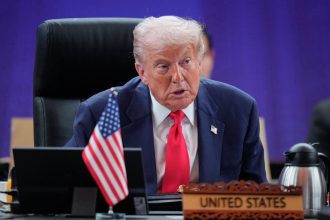
The announcement was made early Saturday by US President Donald Trump, who described the operation as a “complex mission” carried out in collaboration with Nigerian troops. President Bola Tinubu later confirmed the development, calling it a major success in international counterterrorism cooperation.
Al-Minuki, also known as Abor Mainok or Abubakar Mainok, was reportedly the second-in-command of ISIS and a key figure in coordinating activities of the Islamic State West Africa Province (ISWAP) in the Lake Chad Basin region.
Security analysts say his death could temporarily disrupt ISWAP’s operational capacity, especially as several of his close lieutenants were also reportedly killed during the raid.
Born in 1982 in Mainok, Borno State, al-Minuki’s rise within ISIS-linked networks remains partly unclear. However, intelligence sources said he arrived in the Lake Chad region alongside nearly 60 foreign fighters sent to strengthen ISWAP’s military structure and battlefield operations.
The fighters were believed to have combat experience from the Middle East and introduced tactics similar to those used by ISIS in Iraq and Syria. These reportedly included coordinated night attacks, drone-assisted surveillance and strikes, advanced improvised explosive devices (IEDs), suicide bombings, and improved battlefield logistics.
According to security sources, al-Minuki played a major role in facilitating international funding, strategic communications, and training support between ISIS central leadership and ISWAP factions operating across West Africa.
The ministry of foreign affairs also linked him to recent attacks on military formations in Nigeria’s north-east.
Reports by the International Crisis Group indicate that al-Minuki had a difficult relationship with late Boko Haram leader Abubakar Shekau. Although Shekau benefited from ISIS support, tensions reportedly emerged over ISIS leadership demands and operational control.
ISIS, originally formed in Iraq before expanding into Syria, began spreading into Africa after the collapse of its caliphate in the Middle East in 2017. Analysts say weakened governance structures across parts of Africa created opportunities for the extremist group to establish affiliates, including ISWAP in the Lake Chad region.
Credit: TheCable