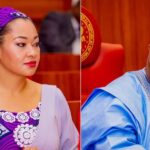
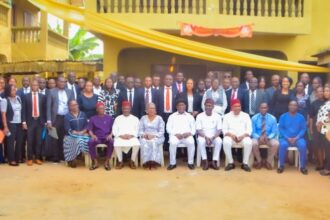
The House of Representatives Committee on the Niger Delta Development Commission (NDDC) has received the Management Board of the Commission for an oversight engagement, as the NDDC presented its proposed 2025 “Budget of Consolidation.”
Chairman of the Committee, Hon. Erhiatake Ibori-Suenu, disclosed that the engagement took place at the House of Representatives Complex, with the NDDC delegation led by the Managing Director, Dr. Samuel Ogbuku.
According to Hon. Ibori-Suenu, Dr. Ogbuku explained that the 2025 budget builds on the Commission’s 2024 “Budget of Renewed Hope” and reflects a strategic shift from transactional interventions to transformational development, in line with the Renewed Hope Agenda of President Bola Ahmed Tinubu.
“The proposed 2025 budget reflects a nine per cent reduction from the 2024 budget of ₦1.985 trillion, underscoring fiscal prudence and strategic prioritisation,” the committee chairman said.
She noted that funding for the budget is expected to come from federal allocations, oil company contributions, carried-forward revenues, recoveries, and internally generated revenue. Of the total proposed expenditure, ₦1.631 trillion is earmarked for regional development projects across the Niger Delta.
The budget, she added, also makes provisions for internal projects, personnel costs and overheads, while introducing a sectoral budgeting framework designed to improve efficiency, transparency and measurable development outcomes.
Hon. Ibori-Suenu reaffirmed the National Assembly’s commitment to supporting the Commission through effective legislative oversight to ensure the Niger Delta people benefit fully from federal development initiatives.

“As legislators, we remain fully committed to providing the required legislative support to ensure that the people of the Niger Delta benefit maximally from the Renewed Hope Agenda,” she stated.
She further assured that the House Committee would continue to work closely with the NDDC Board to consolidate the Commission’s emerging transformational focus and move away from the transactional practices that previously defined its operations.
“Our collective goal remains clear: sustainable development, accountability and tangible progress for the Niger Delta region,” Hon. Ibori-Suenu said.