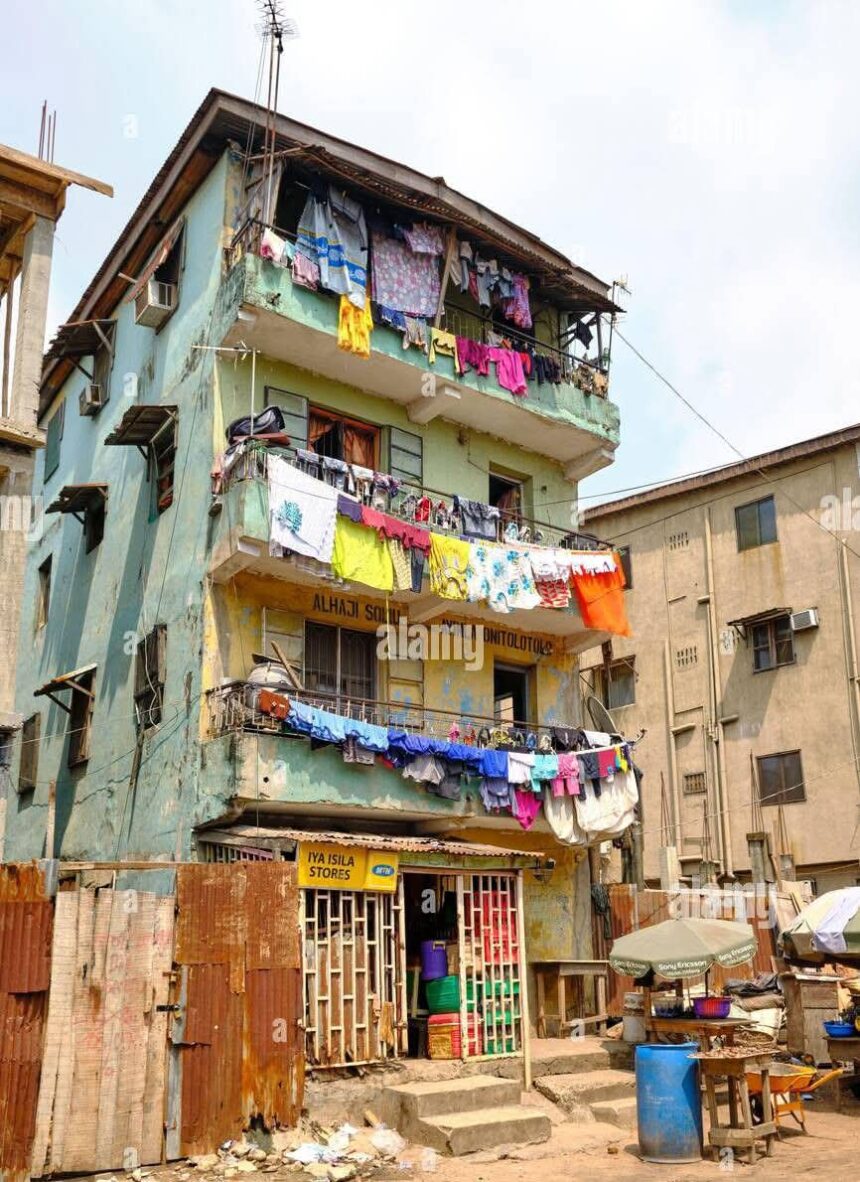
House rent in Lagos has become more than an inconvenience—it is fast turning into a full-blown crisis that many fear will soon push average earners out of the city entirely.
Across areas once considered relatively affordable—Ajah, Ogudu, Ogba, Gbagada—rents have climbed to staggering levels. A self-contained room, often barely spacious enough to move freely, now goes for as much as ₦1.5 million annually. A modest one-bedroom flat can cost ₦3 million or more, even outside high-end locations like Lekki and Victoria Island.
But rent is only the beginning.
Prospective tenants are routinely required to pay a long list of additional charges—agency fees, caution fees, legal fees, agreement fees, and service charges. By the time everything is added up, renters say they are paying close to 50 percent more than the advertised rent just to secure a place to live.
“You’re looking for a ₦2 million apartment, but you need almost ₦3 million to move in,” said a Lagos resident who shared their experience online. “That’s not just unfair—it’s outrageous.”
Beyond the financial burden, many landlords have introduced strict profiling practices. According to residents, unless a prospective tenant works for a multinational company or can present income from a job deemed “acceptable,” they are often turned away—even when apartments remain visibly empty.
Freelancers, remote workers, and creatives say they are frequently dismissed. “Once you say you’re a graphic designer, photographer, content creator, or virtual assistant, they lose interest,” the resident said. “The house suddenly becomes ‘no longer available.’”
The result, many argue, is a vicious cycle. People who already have accommodation are increasingly reluctant to move, knowing that relocating could trigger what one renter described as a “financial hurricane.” As fewer people move out, available housing becomes scarcer, pushing prices even higher.
All of this is happening despite the fact that many of the apartments, residents say, are poorly maintained and offer little value for their soaring costs.
“This is not sustainable,” the resident warned. “At this rate, only the wealthy will be able to afford shelter in Lagos. Everyone else will be forced under bridges or back to villages they left in search of opportunity.”
There are growing calls for the Lagos State Government to step in with meaningful regulation and policy reforms to address rising rent, unchecked fees, and discriminatory rental practices.
“This is a call for help,” the resident said. “Housing is a basic need, not a luxury. It needs serious attention—and it needs it now.”