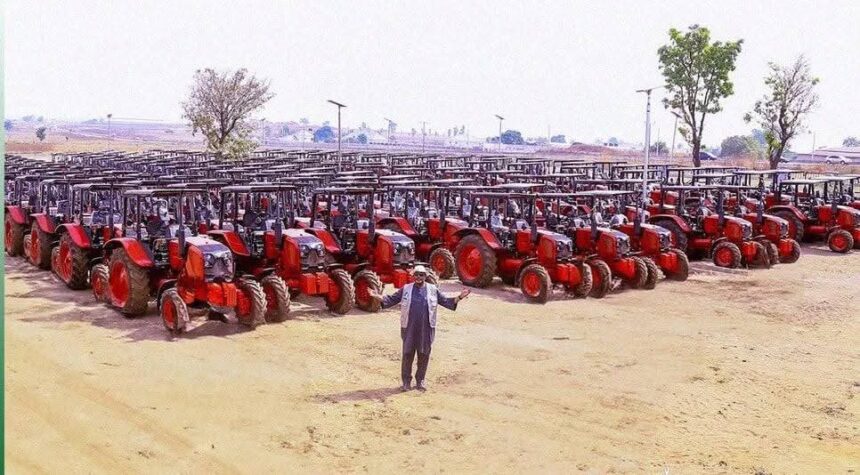
Seven months after they were unveiled amid national fanfare, dozens of tractors and other heavy-duty farming machines meant to drive Nigeria’s agricultural transformation remain idle on the outskirts of Abuja.
Parked within the vicinity of the National Agricultural Seeds Council (NASC) in Gwagwalada, rows of red-and-black tractors, bulldozers and mobile workshops sit unused, quietly gathering dust. The fully mechanised equipment was shipped more than 7,800 kilometres from Belarus to Nigeria as part of President Bola Tinubu’s Renewed Hope Agricultural Mechanisation Programme.
Launched in June 2025 and popularly referred to as the Belarus Project, the initiative was introduced as a major intervention aimed at modernising Nigeria’s agricultural sector, reducing manual farm labour and boosting food production. The programme was also positioned as a strategy to make farming more attractive to young Nigerians, many of whom have turned away from agriculture due to its labour-intensive nature.
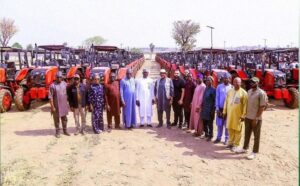
Implemented in partnership with AfTrade DMCC and supported by the Republic of Belarus, the project was presented by the Tinubu administration as a turning point for smallholder farmers across the country.
However, months after the high-profile launch, the machines remain largely unused, raising questions about deployment plans, operational readiness and the broader effectiveness of government-led agricultural interventions at a time when Nigeria continues to grapple with rising food prices and food insecurity.