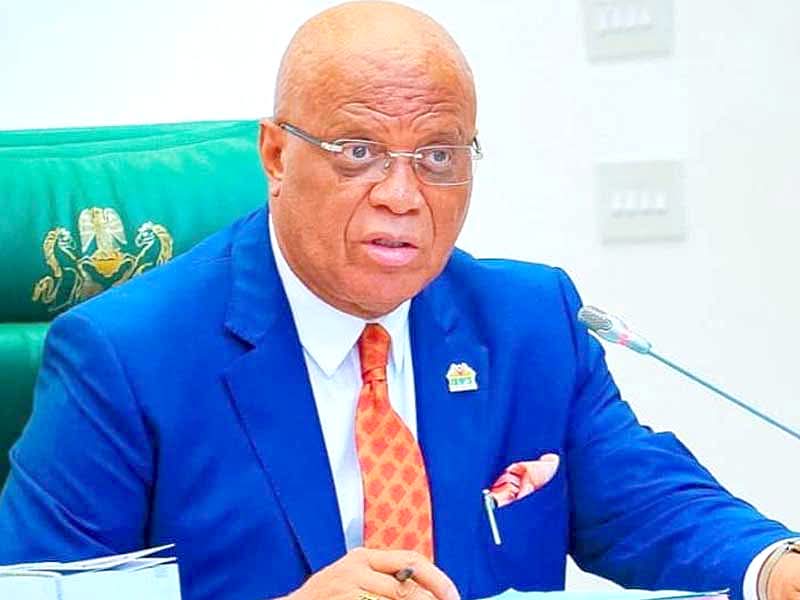
The Akwa Ibom State Government has outlawed the use of ambulances to transport corpses for burial across the state, warning that any ambulance caught conveying a corpse will be impounded.
The State Commissioner for Health, Dr Ekem John, announced the new regulation on Thursday during the monthly media briefing organised by the Ministry of Information.
John, who spoke alongside the Commissioner for Information, Hon. Aniekan Umana, and the Chief Press Secretary to Governor Umo Eno, Ekerete Udoh, described the measure as one of the major reforms introduced in the state’s health sector.
According to him, corpses must be transported in hearses, while ambulances are strictly reserved for emergency medical services.
“Through this law, the state government has now criminalised and outlawed the use of ambulances to carry corpses,” the commissioner said.
He explained that the restriction applies to all ambulances, including privately owned, mission-operated and government-owned vehicles.
“You will not find any government ambulance at any burial site. The law is very clear, whether it is a privately owned ambulance, mission ambulance or government ambulance, you cannot carry corpses,” John said.
The commissioner warned that using ambulances to transport corpses could constitute a public health risk, adding that the new law empowers government officials to impound vehicles found violating the regulation.
“Corpses are carried by hearses and when you now use our ambulance to carry corpses, you are creating a public health threat to the rest of the public,” he said.
He urged members of the public to take note of the regulation, warning that ambulances hired to convey corpses could be intercepted and impounded while in transit.
The commissioner also disclosed that about nine health-related bills had been forwarded to the Akwa Ibom State House of Assembly for consideration and possible passage into law.
He said the proposed legislation covered areas including hospital governance, public health security, HIV prevention, protection and anti-discrimination, as well as public health standards and regulations.
John explained that once the health standards regulatory bills are enacted, the relevant agency would have the authority to establish minimum acceptable standards for health facilities operating in the state.
He added that hospitals and other health facilities would be required to meet stipulated standards before commencing operations.
The commissioner said the measures formed part of the state government’s broader efforts to strengthen the health sector and improve the quality and safety of healthcare services across Akwa Ibom.